





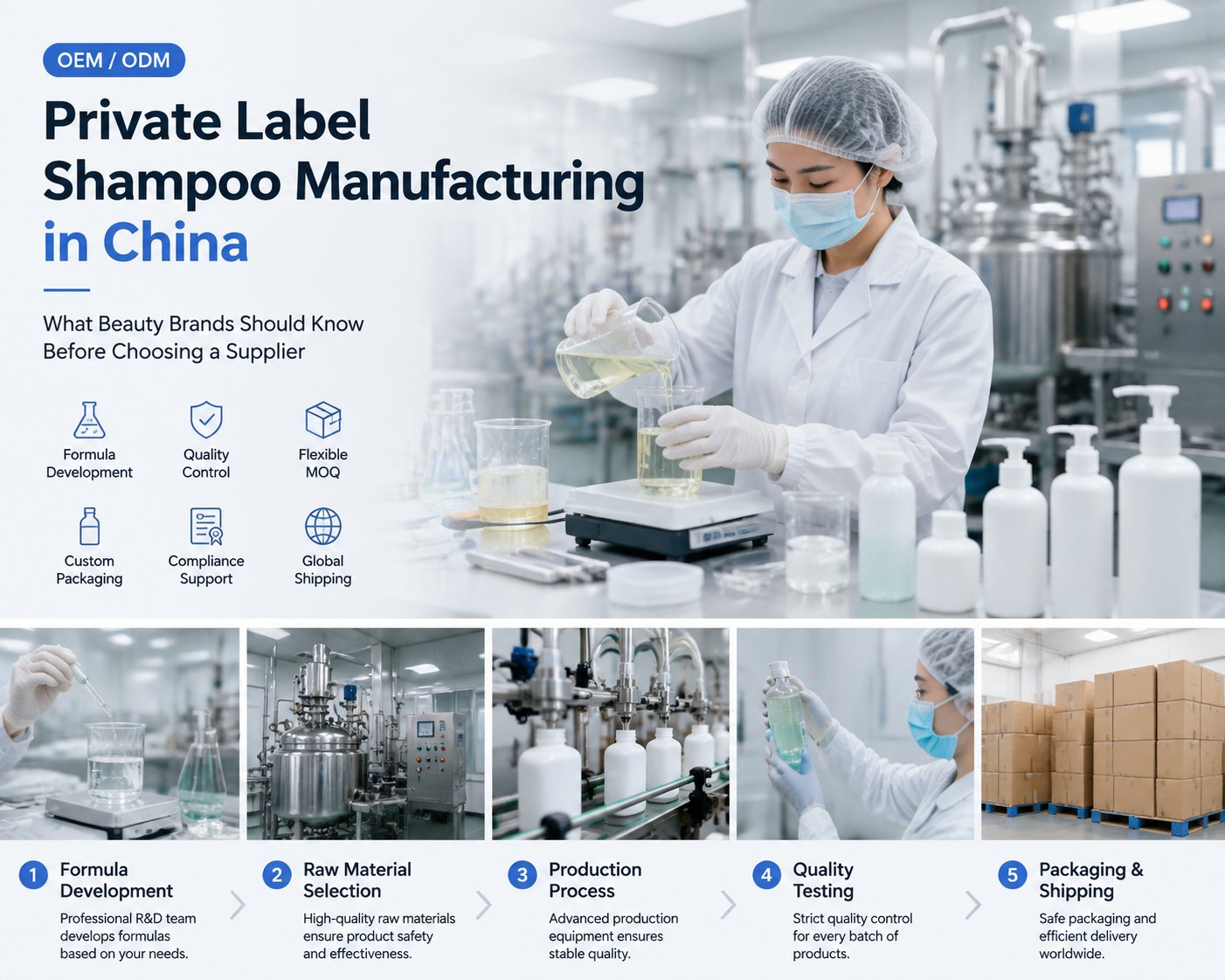
Private Label Shampoo Manufacturing in China: What Beauty Brands Should Know Before Choosing a Supplier

Discover how beauty brands choose a private label shampoo manufacturer in China, including formula development, MOQ, packaging, quality control, testing and OEM production process.

How to Choose a Private Label Shampoo Manufacturer in China
Learn how to choose a private label shampoo manufacturer in China, including formula development, MOQ, packaging, testing, compliance, and OEM production process.
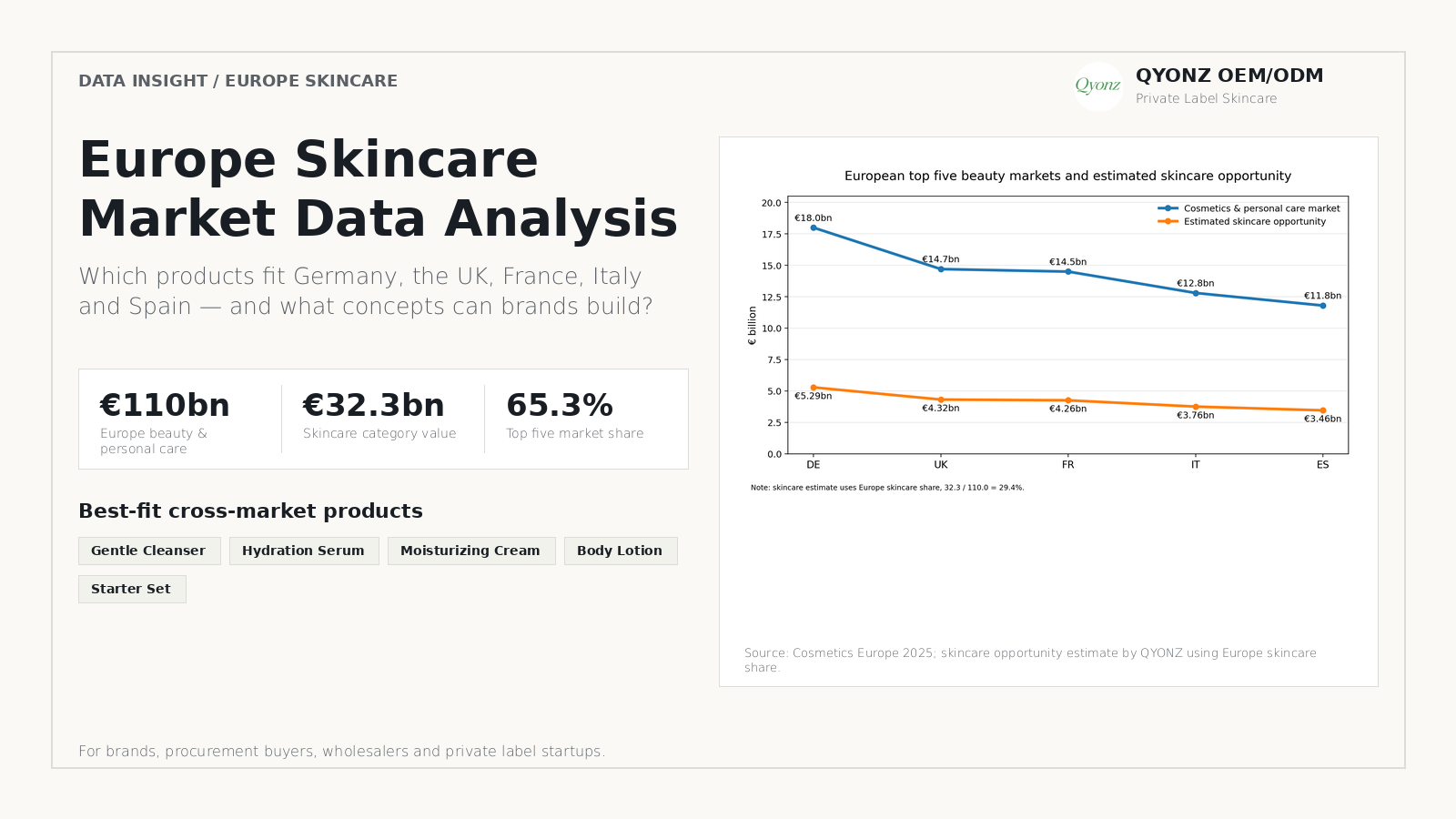
Data Analysis of the Skincare Market in Five European Countries: Which Products Are Suitable for Development in Germany, the UK, France, Italy, and Spain?
This article analyzes product opportunities across five key European skincare markets—Germany, the UK, France, Italy, and Spain—using market data. By examining factors such as market size, opportunity estimates, product-market fit, concept-market fit, and OEM/ODM private-label development, the article helps brands, buyers, wholesalers, and skincare startups identify the most suitable products for specific European markets and translate data into actionable skincare product development strategies.
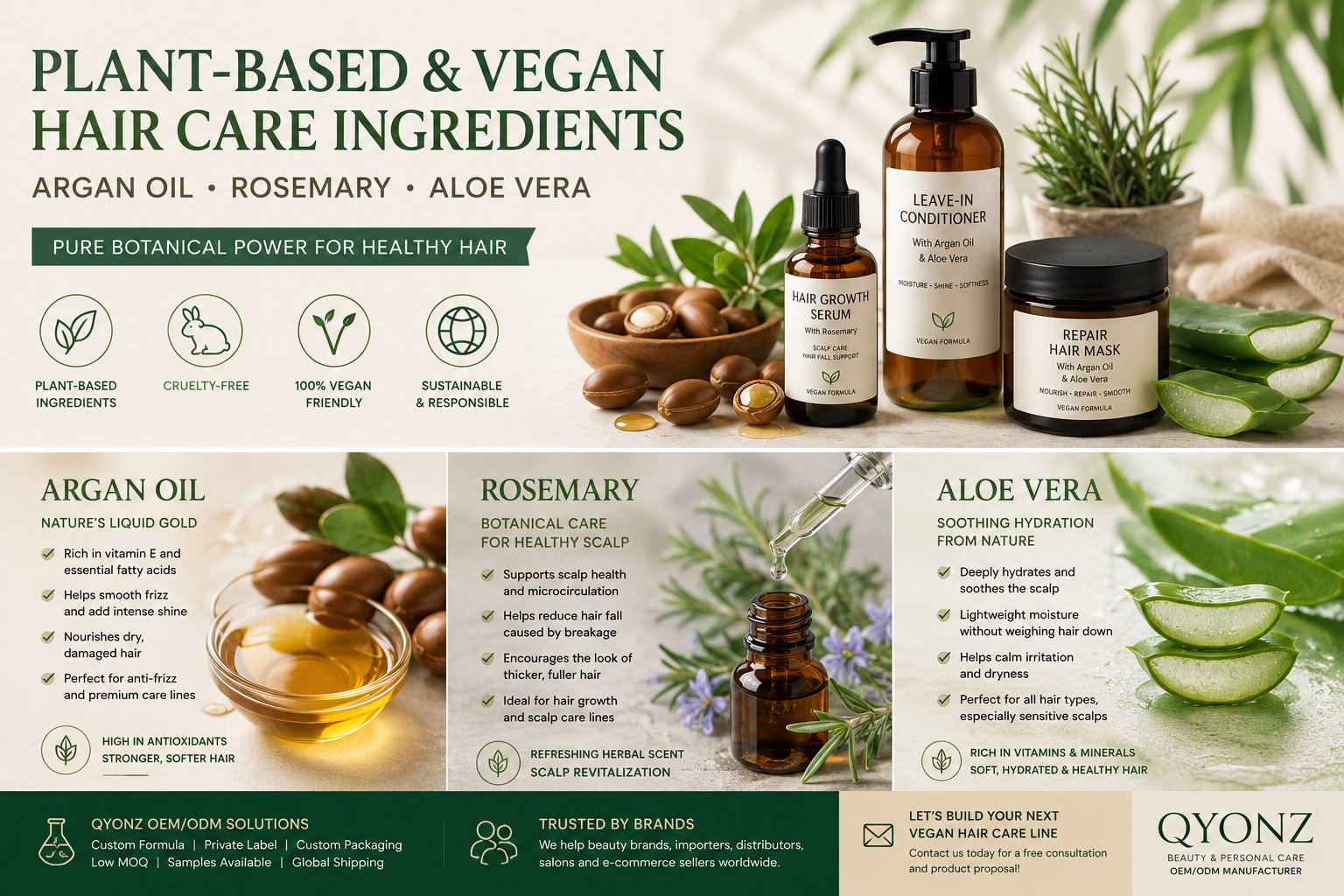
Private Label Vegan Hair Care Ingredients: Argan Oil, Rosemary and Aloe Vera for Global Brands
This article explains how beauty brands, importers, distributors, salons and ecommerce sellers can use argan oil, rosemary and aloe vera to build practical plant-based and vegan hair care product lines. It covers ingredient positioning, vegan claim checks, product line strategy, channel value and Qyonz OEM/ODM support.
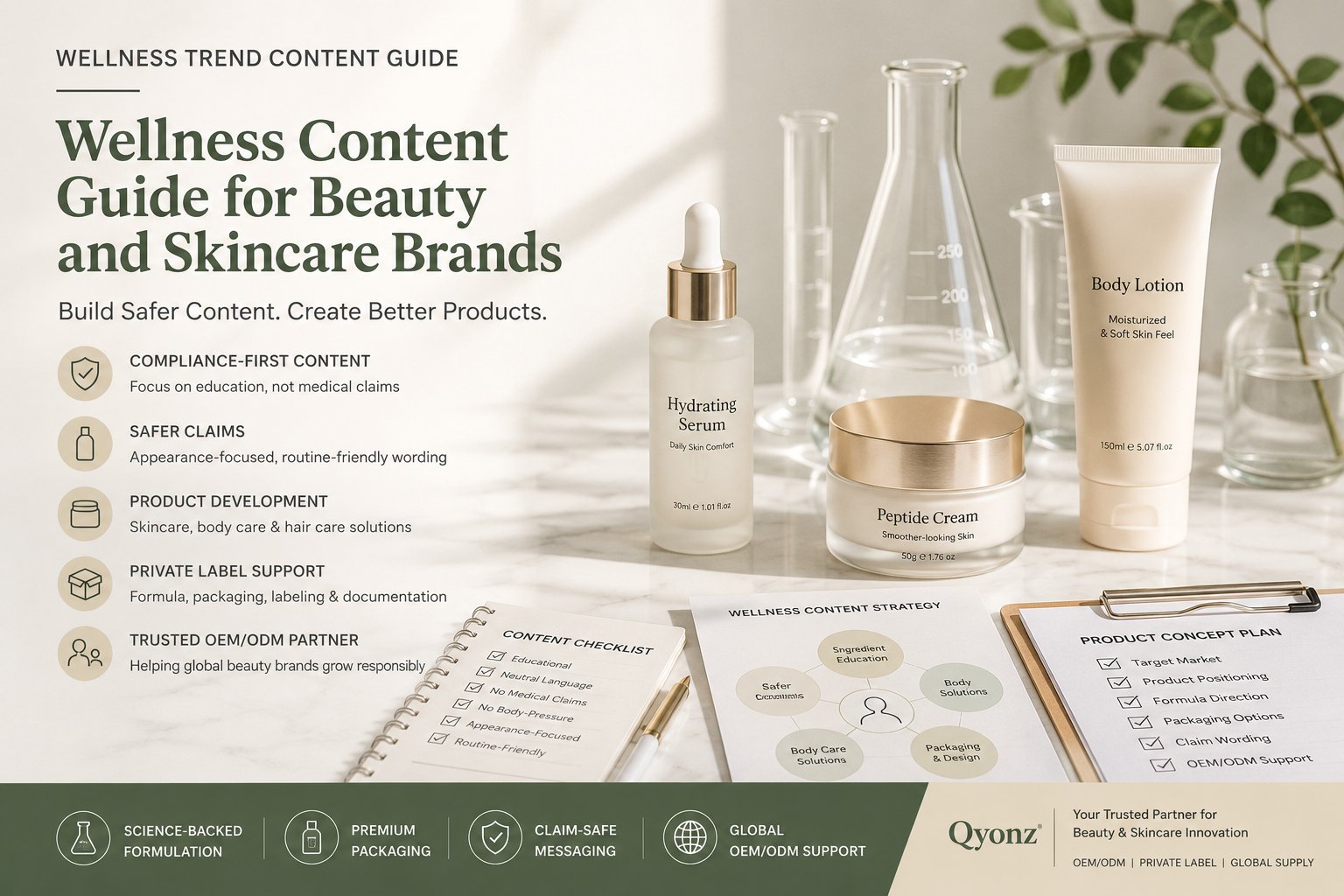
Wellness Trend Content Guide for Beauty and Skincare Brands
Wellness-related topics are becoming more visible in beauty, skincare, body care, and consumer lifestyle discussions. For beauty brands, the key is to create educational, neutral, and claim-safe content that supports responsible product positioning without making medical, body-result, or personal appearance promises. This guide explains how brands can build safer content frameworks for wellness-sensitive topics, including GLP-1-related market conversations.
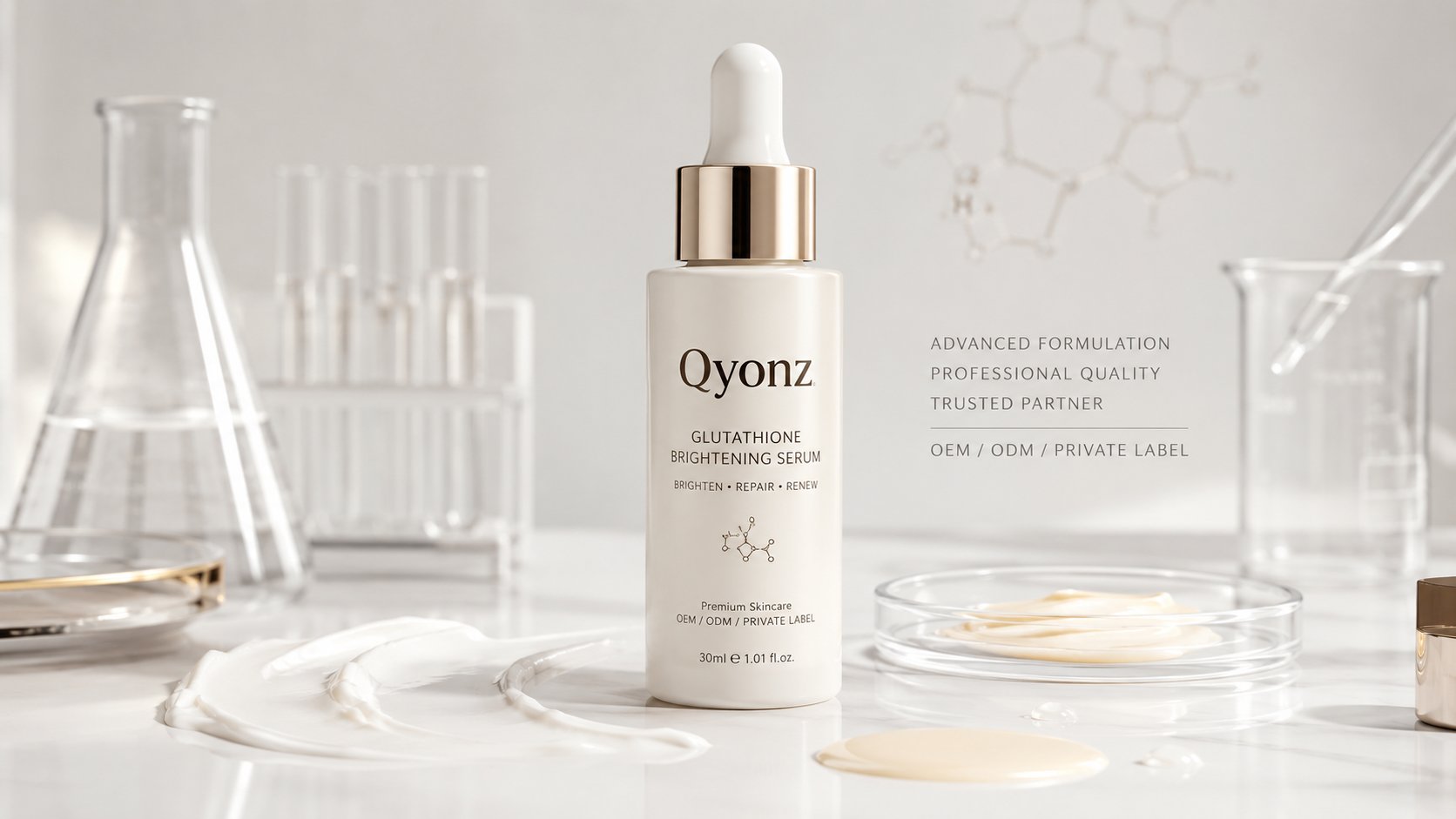
What Is Glutathione in Skincare? A B2B Formulation Guide
Glutathione is increasingly used in radiance-focused skincare, including serums, creams, masks, and body lotions. For beauty brands, the real value is not only the ingredient name but also the product format, ingredient pairing, safe claim wording, packaging strategy, and OEM/ODM development plan. This article explains how brands can develop glutathione skincare products with a B2B formulation mindset, supported by market context, search intent analysis, compliance references, and practical product development tables.
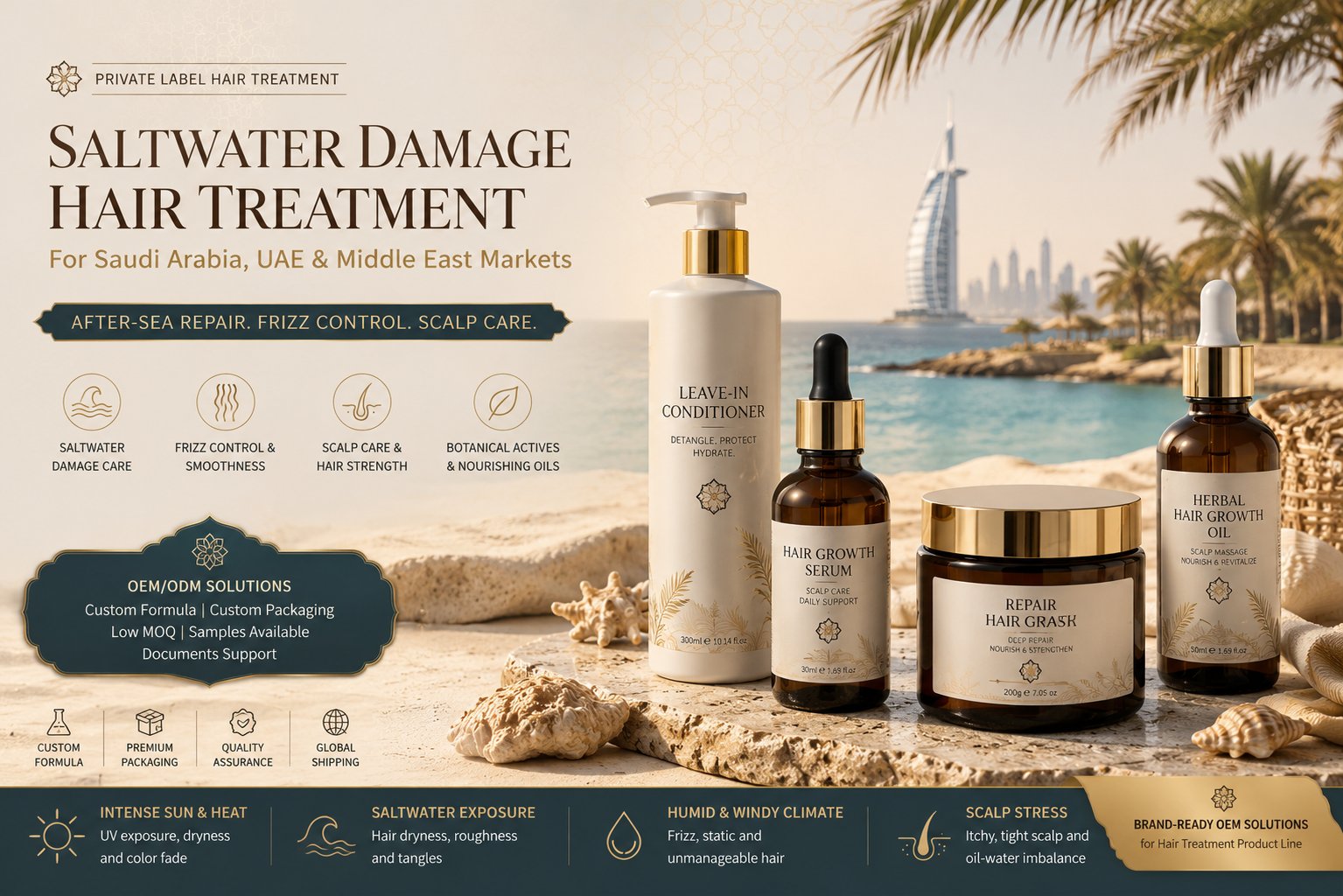
Private Label Hair Treatment Products for the Middle East: Saltwater Damage, Frizz and Scalp Care
This article explains how beauty brands, importers, distributors, salon suppliers and ecommerce sellers can develop a private label hair treatment line for Saudi Arabia, UAE and Middle East markets. It focuses on saltwater damage, frizz, dry hair, scalp care and after-sea repair, with practical product positioning for leave-in conditioner, repair hair mask, lightweight hair growth serum and herbal hair growth oil.
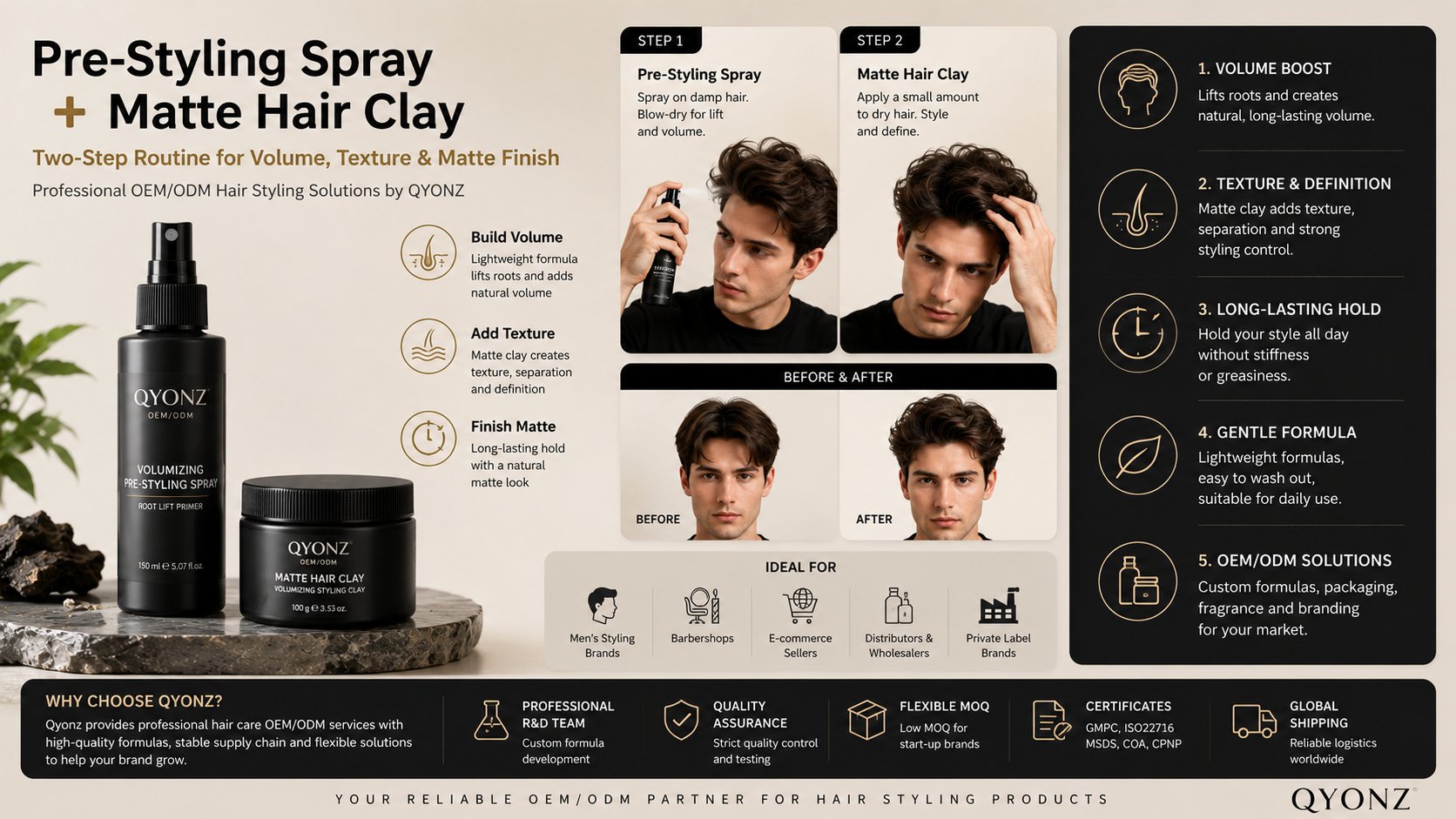
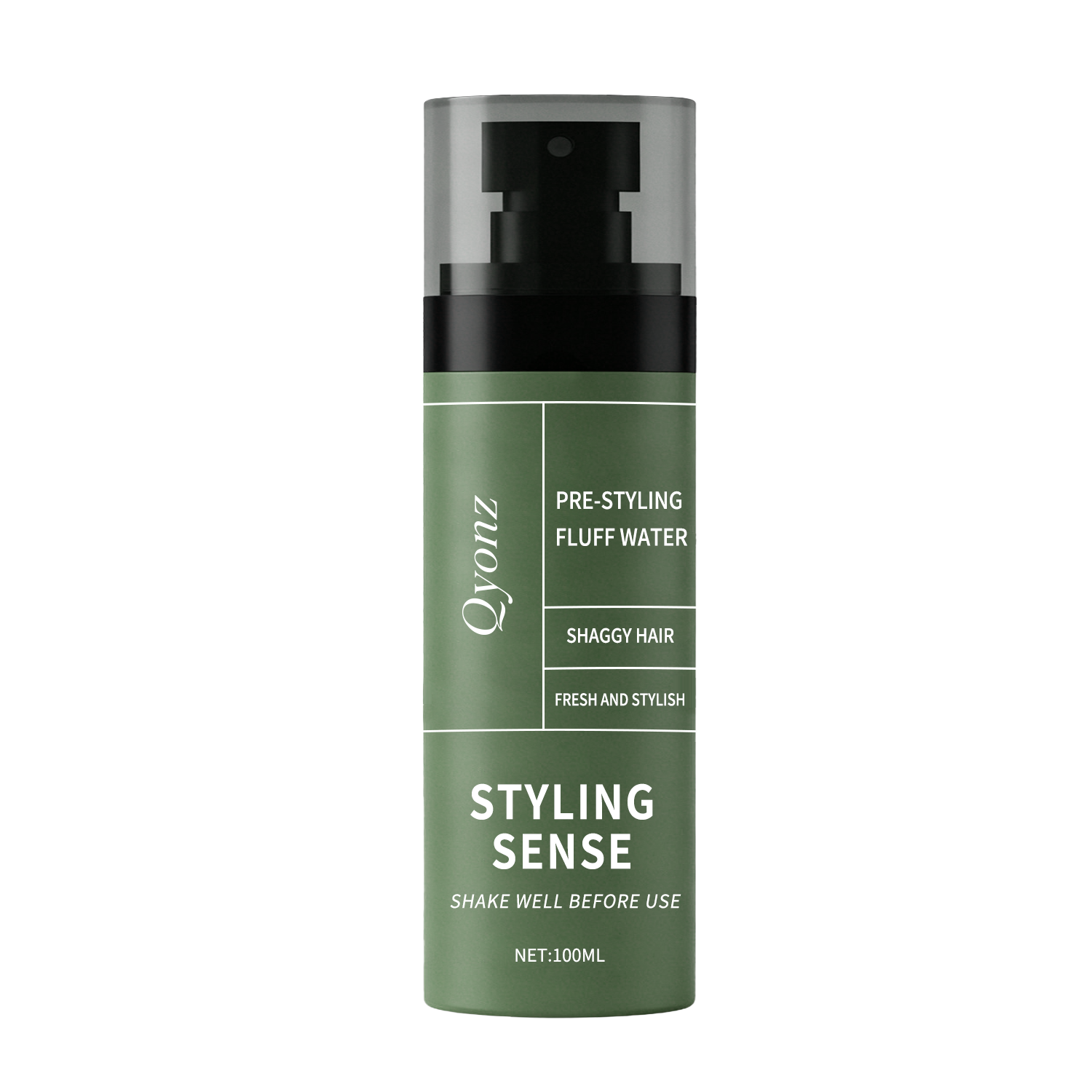
Pre-Styling Volumizing Spray and Matte Hair Clay OEM Guide for Men’s Styling Brands
Learn how men's styling brands can build a two-step product line with volumizing pre-styling spray and matte hair clay. This guide covers formula direction, packaging options, MOQ factors, sample testing and OEM project planning.
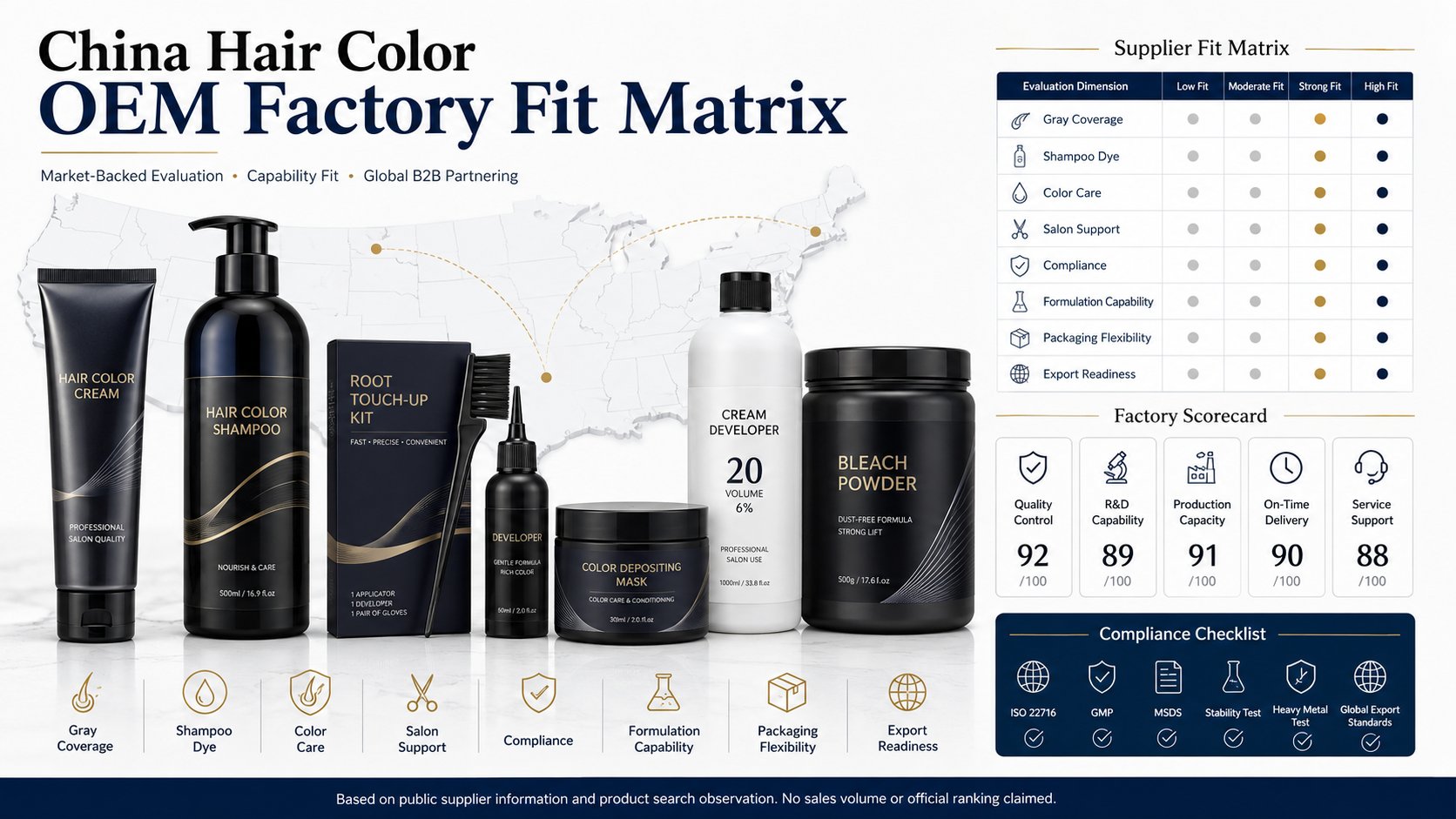
China Hair Color OEM Factories for U.S. Brands: A Supplier-Fit Ranking
This supplier-fit ranking analyzes China hair color OEM factories for U.S. private label buyers through public factory information, U.S. retail product signals, professional channel evidence and FDA hair dye compliance requirements.
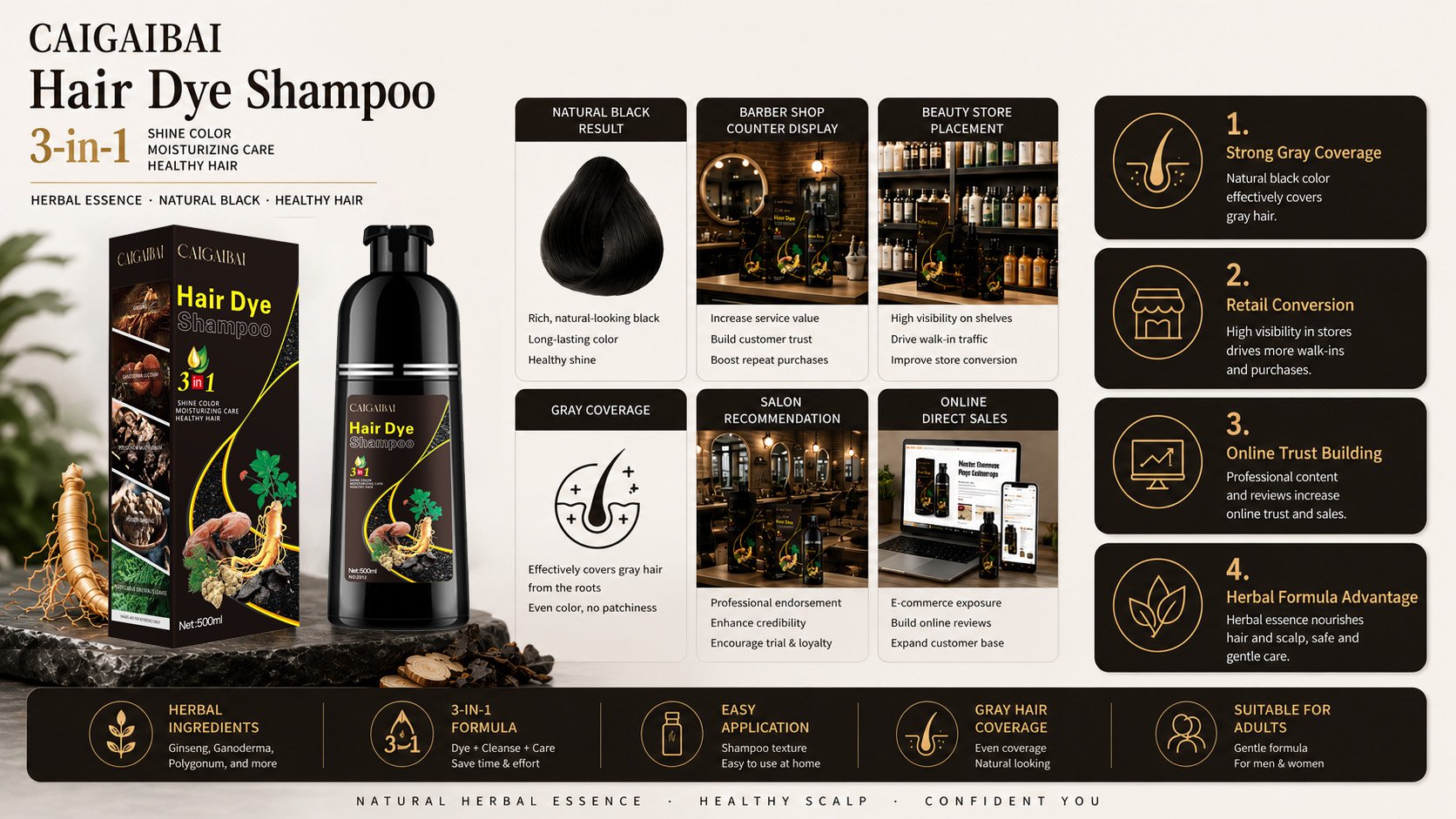
New Zealand Hair Dye Launch Data: Why Gray Coverage Needs an Offline-First Plan and the Right China OEM Factory
This data-led blog analyzes New Zealand’s gray coverage hair dye opportunity through public demographic, digital, retail, product-format and cosmetic compliance signals. It also explains what kind of China OEM/ODM factory can help importers and private label buyers turn the market plan into a producible product line.
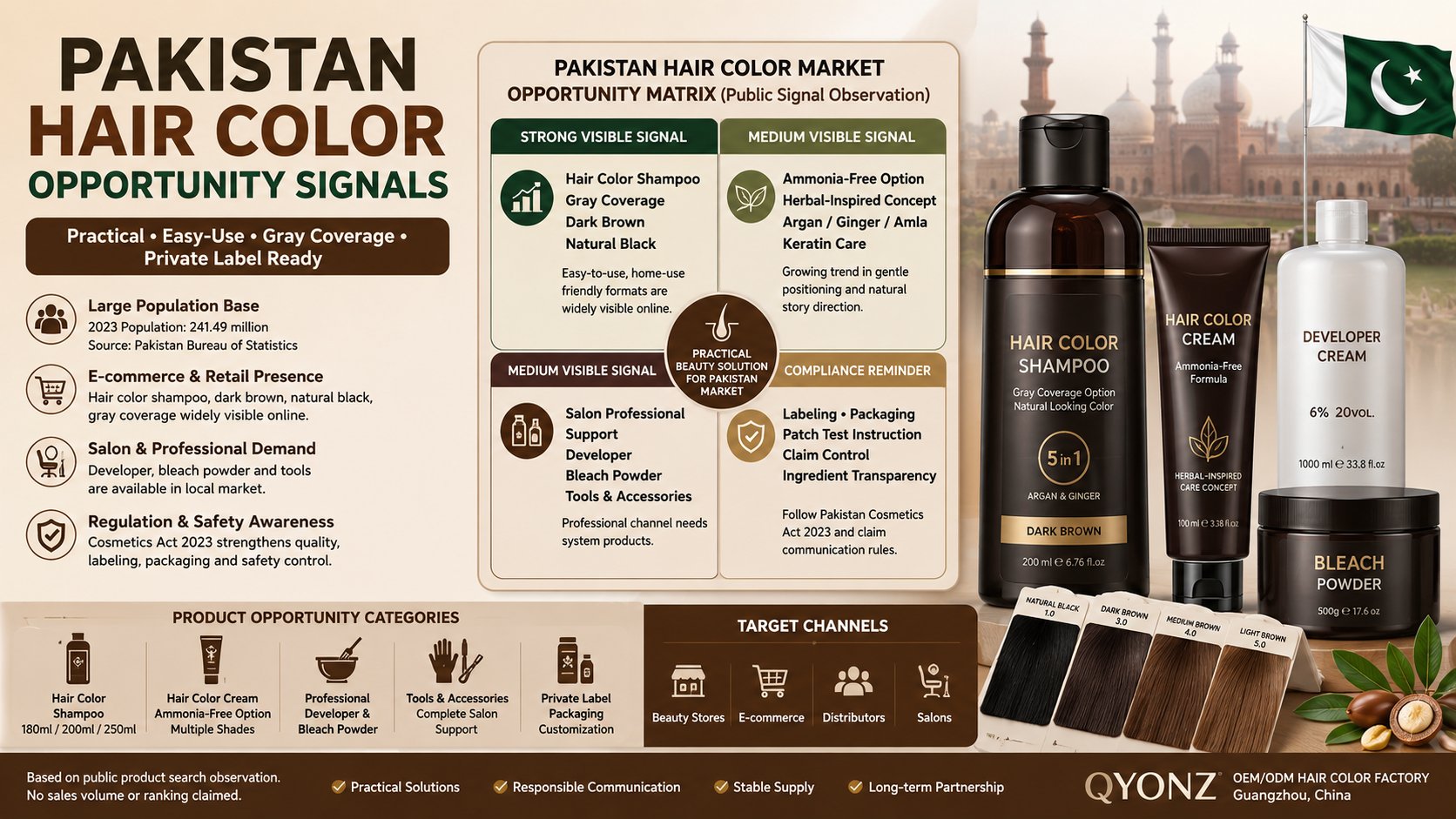
Pakistan Hair Color Shampoo Market: What B2B Buyers Should Know Before Launching a Private Label Line
Pakistan shows visible public product signals for hair color shampoo, dark brown and natural black shades, gray coverage options, and salon support products. This guide explains how importers, distributors, and private label brands can plan market-ready hair color SKUs without relying on unsupported sales claims.
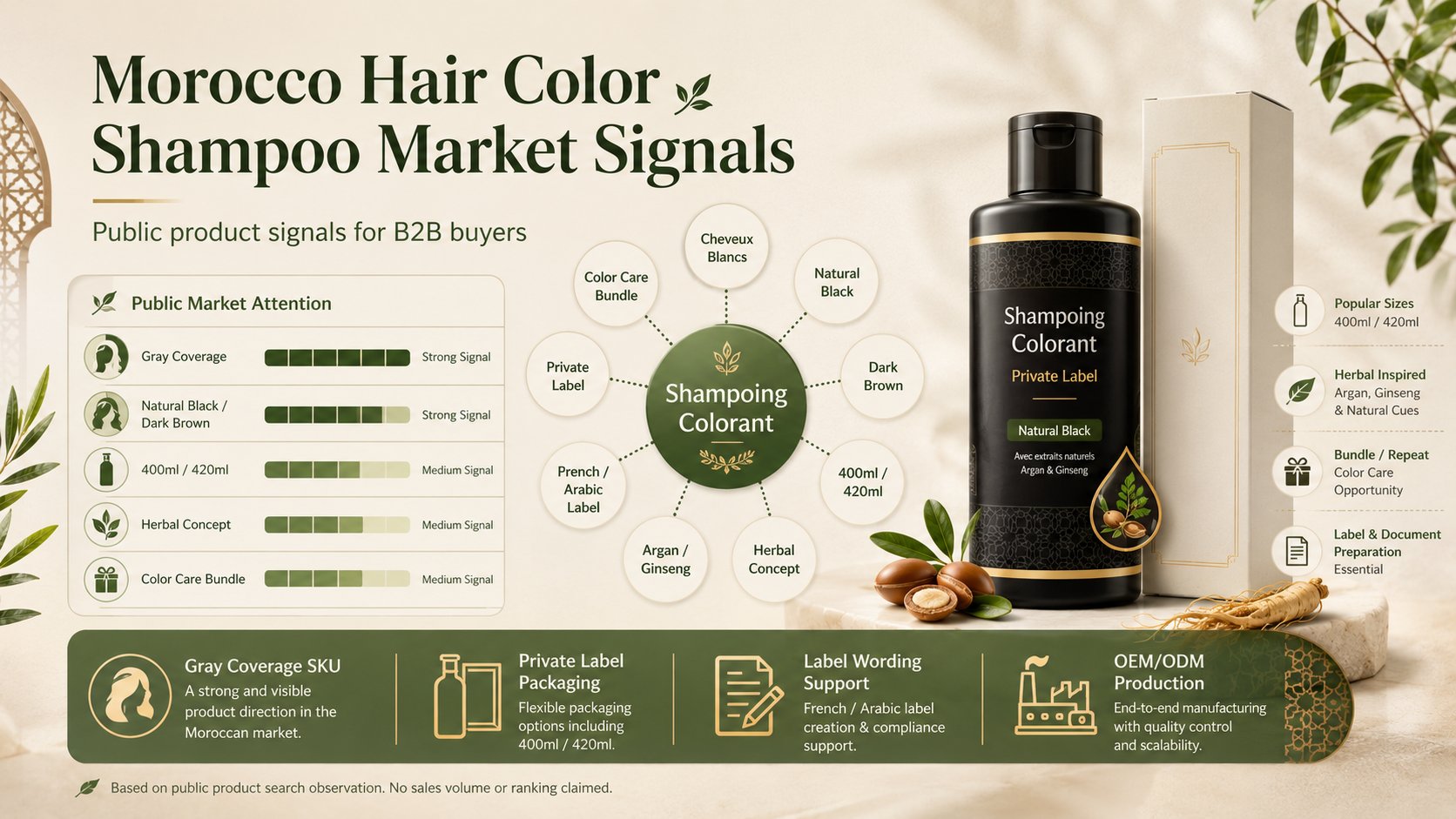
Morocco Hair Color Shampoo Buyer Guide: Private Label Gray Coverage Products
A B2B buyer guide for Morocco hair color shampoo importers, covering gray coverage shampoo, private label packaging, shade planning, compliance-aware wording and OEM production.
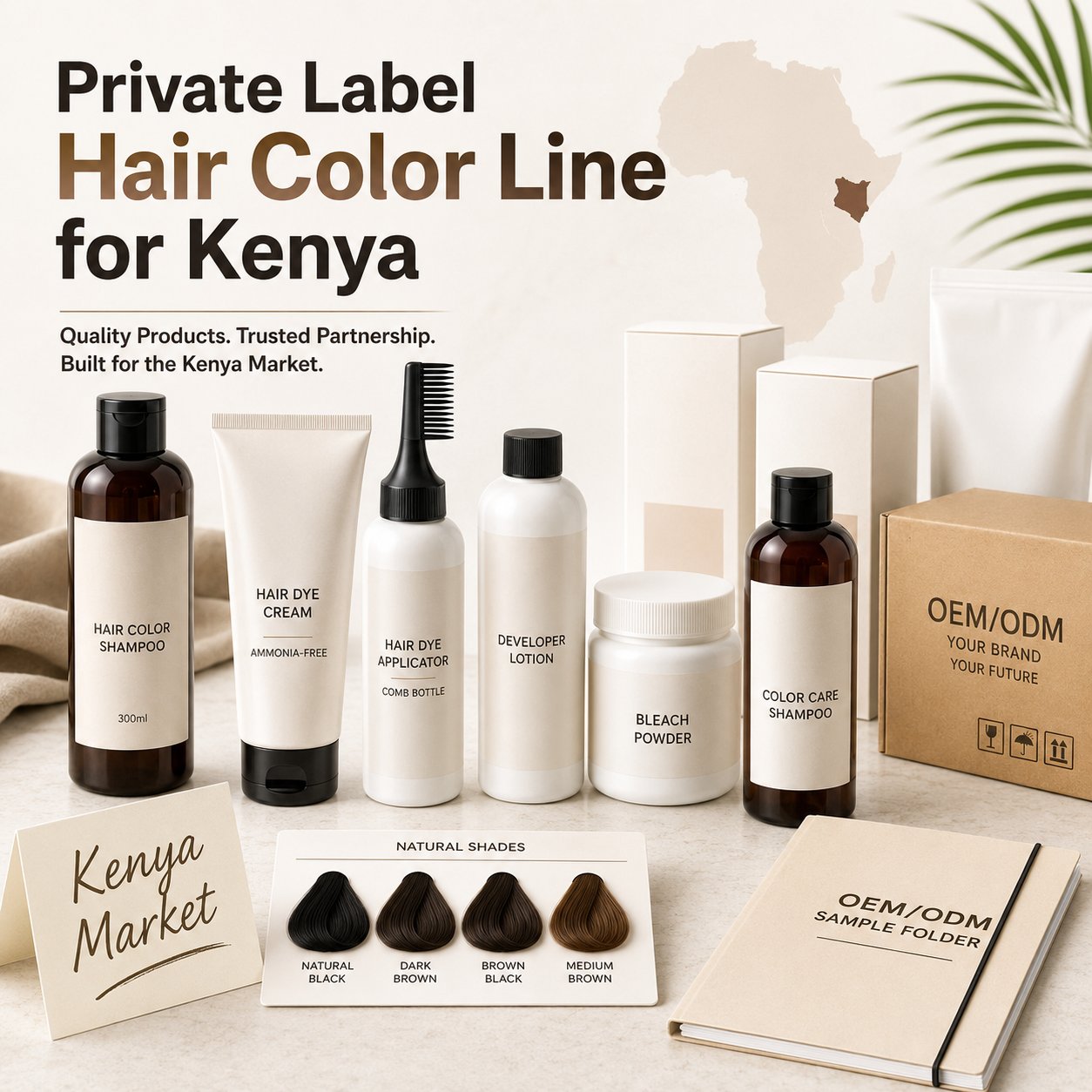
Private Label Hair Color Products for Kenya: How B2B Buyers Can Build a Complete Hair Dye Line
A B2B buyer guide for Kenya hair color importers, covering hair color shampoo, gray coverage products, ammonia-free dye cream, beard color, developer, bleach powder, color care and OEM private label planning.

From Formula to Shelf: Inside the QYONZ Manufacturing Process for Clean Beauty (EU & Retail-Ready)
“Clean Beauty” is no longer a marketing claim—it’s a compliance gate. Retailers and regulators increasingly require ingredient transparency, traceable manufacturing, and documentation that stands up to audits. This article shows how QYONZ turns a concept into shelf-ready clean beauty private label hair care through a five-step system: requirement mapping, iterative lab sampling with test data, ISO/GMP-aligned production controls, packaging compatibility and labeling support, and post-launch change control. You’ll also see what “radical transparency” looks like in practice—SDS/COA per batch, traceable QC records, and documentation workflows designed to support EU-aligned requirements.
Why MOQ and Compliance Matter More Than Ever in Haircare OEM Manufacturing (2026 Playbook)
Most founders treat MOQ as a factory limit, but in haircare OEM manufacturing, MOQ determines your unit economics, packaging access, inventory risk, and speed to scale. Ultra-low runs (100–300 units) inflate cost and restrict packaging options, while legacy 10,000+ MOQs can freeze cash flow before you validate product-market fit. A 1,000-unit baseline is often the operational sweet spot—large enough for stability testing, packaging compatibility, and better pricing tiers, yet small enough to protect working capital. In 2026, compliance is the second deal-maker: ISO 22716/GMP processes, plus SDS/COA and ingredient documentation, reduce delisting and retail rejection risk. This guide breaks down the 1,000 MOQ strategy with a buyer’s checklist and FAQ for procurement teams.
The End of Crunch and White Flakes: Liquid Polymer Architecture as the Ultimate Sea Salt Spray Alternative for Private Label Brands
In men’s styling, “grit” is no longer a selling point—performance without scalp stress is. Traditional sea salt sprays create texture by dehydration, often leading to brittle feel, dullness, and customer churn. Texture powders can add lift, but residue and buildup complaints are rising. The next generation solution is Liquid Polymer Architecture (LPA): a non-aerosol, water-based micro-mist that forms a flexible polymer network for root lift and reworkable texture—without crunch or white flakes. This article explains the chemistry shift, what to spec when sourcing a private label formula, and how compliance-first manufacturing (SDS/COA + ISO/GMP processes) de-risks your 2026 launch.
Choosing a Hair Color OEM Manufacturer by Brand Stage (A Practical Guide)

Most brands don’t fail in hair color because they chose the “wrong factory.”They fail because they chose the right type of manufacturer...
Why Brands Switch Hair Color OEM Manufacturers (And What They Look for Next)
For many beauty brands, switching a hair color OEM manufacturer is not a sudden decision—it is the result of repeated production, compl...
Hair Color Compliance: SDS, COA, and What Brands Must Prepare Before Launch
Why Compliance Is a Deal-Breaker in Hair Color Manufacturing
Hair color and color-depositing products are among the most closely rev...
Low MOQ Hair Color Private Label: How Small Batches Can Still Meet Global Standards
The Misconception About
Many brands assume that low MOQ hair color production means compromised quIn reality, low MOQ requires more ...
Ammonia-Free Hair Color OEM: How Professional Manufacturers Formulate Gentler Systems
Why Ammonia-Free Hair Color Is in
Ammonia-free hair color has become one of the fastest-growing requests among indie brands and salon...