






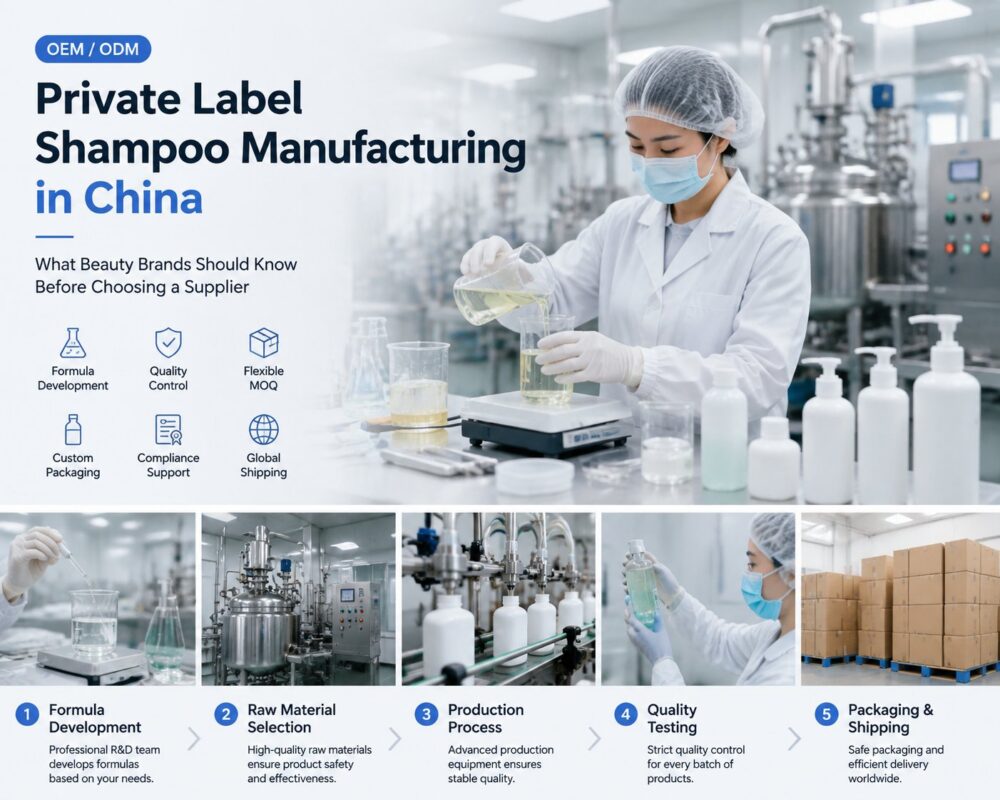
Private Label Shampoo Manufacturing in China: What Beauty Brands Should Know Before Choosing a Supplier

Discover how beauty brands choose a private label shampoo manufacturer in China, including formula development, MOQ, packaging, quality control, testing and OEM production process.

How to Choose a Private Label Shampoo Manufacturer in China
Learn how to choose a private label shampoo manufacturer in China, including formula development, MOQ, packaging, testing, compliance, and OEM production process.
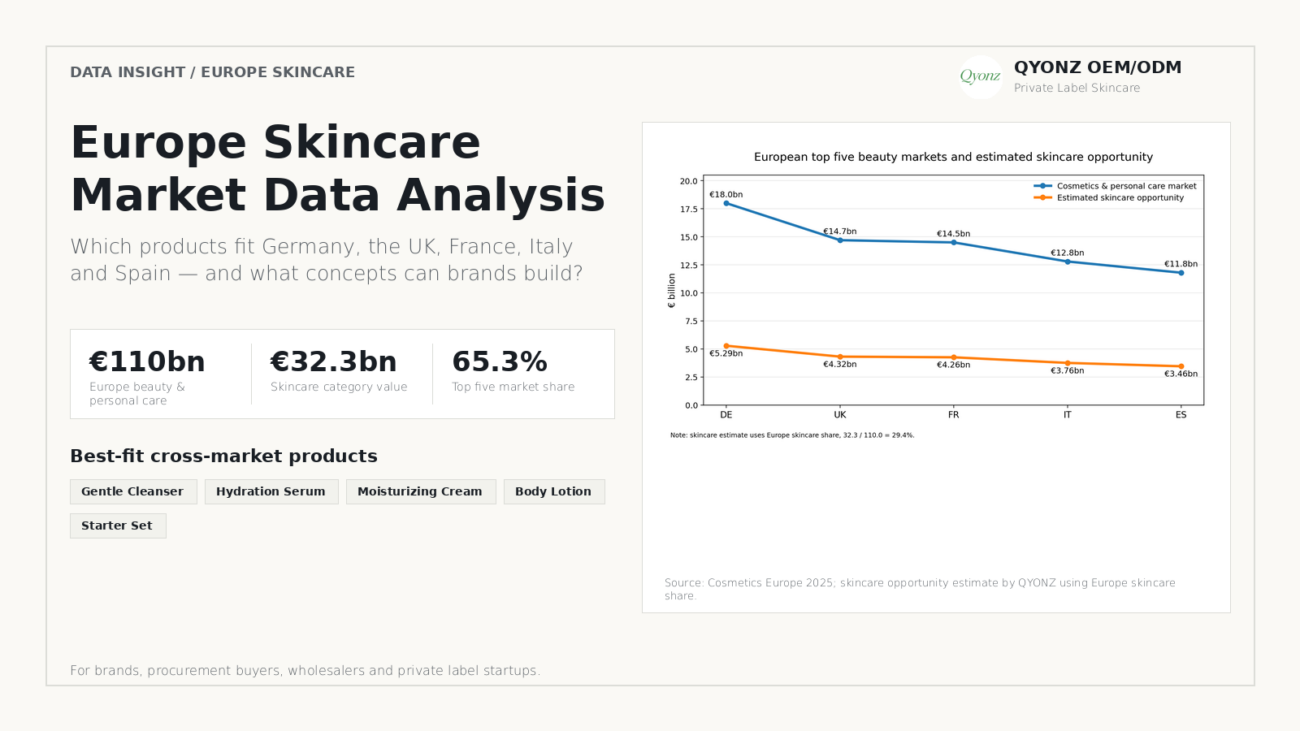
Data Analysis of the Skincare Market in Five European Countries: Which Products Are Suitable for Development in Germany, the UK, France, Italy, and Spain?
This article analyzes product opportunities across five key European skincare markets—Germany, the UK, France, Italy, and Spain—using market data. By examining factors such as market size, opportunity estimates, product-market fit, concept-market fit, and OEM/ODM private-label development, the article helps brands, buyers, wholesalers, and skincare startups identify the most suitable products for specific European markets and translate data into actionable skincare product development strategies.
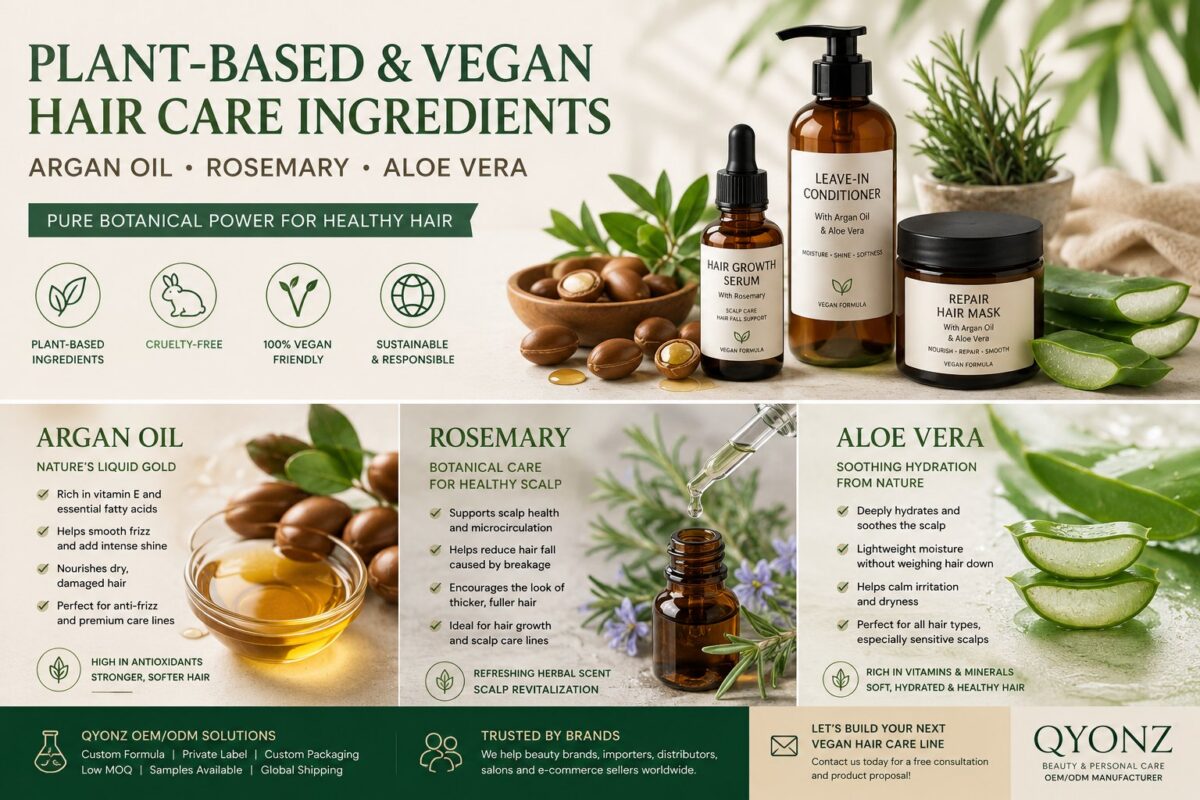
Private Label Vegan Hair Care Ingredients: Argan Oil, Rosemary and Aloe Vera for Global Brands
This article explains how beauty brands, importers, distributors, salons and ecommerce sellers can use argan oil, rosemary and aloe vera to build practical plant-based and vegan hair care product lines. It covers ingredient positioning, vegan claim checks, product line strategy, channel value and Qyonz OEM/ODM support.
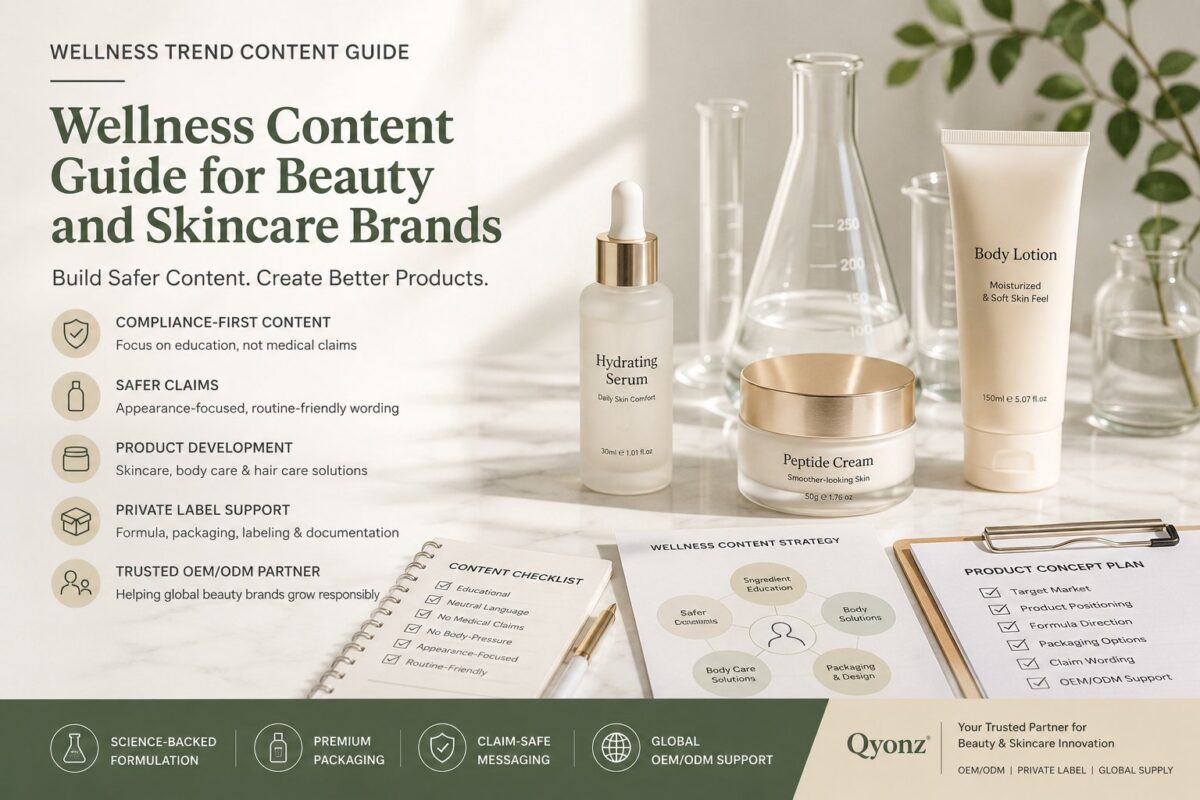
Wellness Trend Content Guide for Beauty and Skincare Brands
Wellness-related topics are becoming more visible in beauty, skincare, body care, and consumer lifestyle discussions. For beauty brands, the key is to create educational, neutral, and claim-safe content that supports responsible product positioning without making medical, body-result, or personal appearance promises. This guide explains how brands can build safer content frameworks for wellness-sensitive topics, including GLP-1-related market conversations.
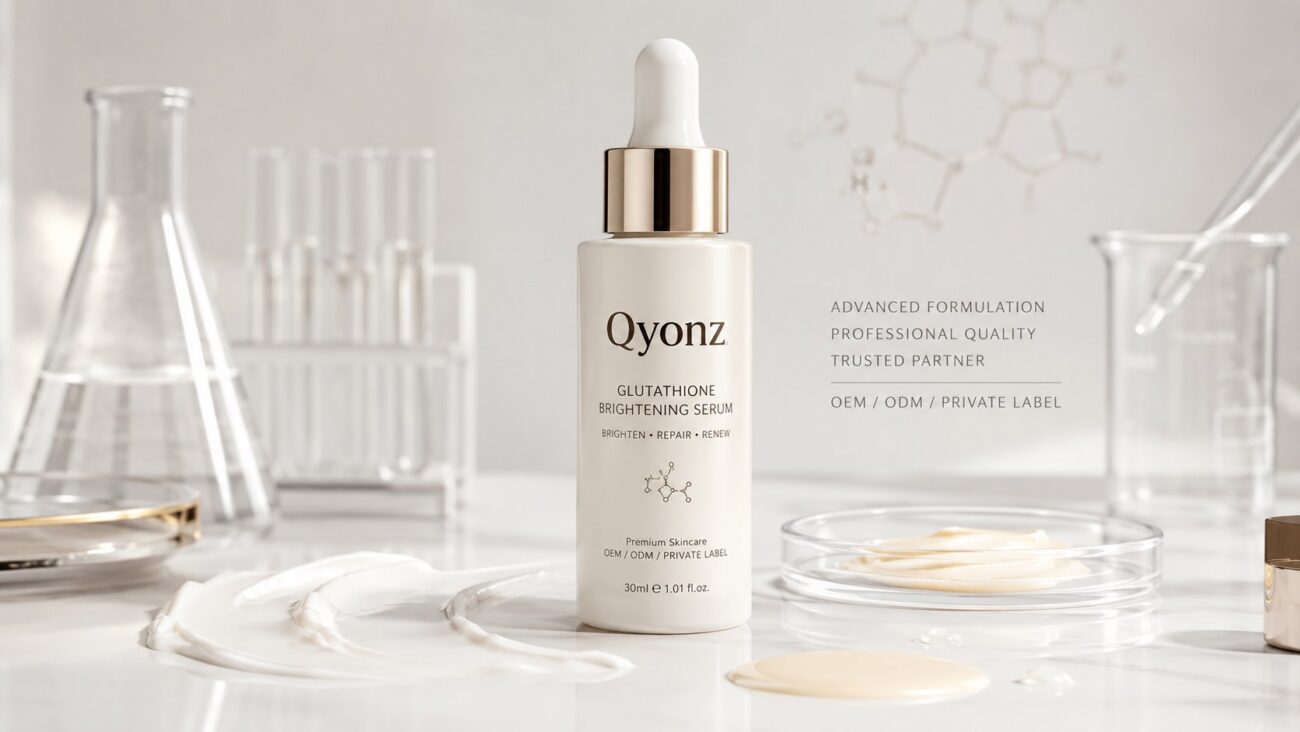
What Is Glutathione in Skincare? A B2B Formulation Guide
Glutathione is increasingly used in radiance-focused skincare, including serums, creams, masks, and body lotions. For beauty brands, the real value is not only the ingredient name but also the product format, ingredient pairing, safe claim wording, packaging strategy, and OEM/ODM development plan. This article explains how brands can develop glutathione skincare products with a B2B formulation mindset, supported by market context, search intent analysis, compliance references, and practical product development tables.
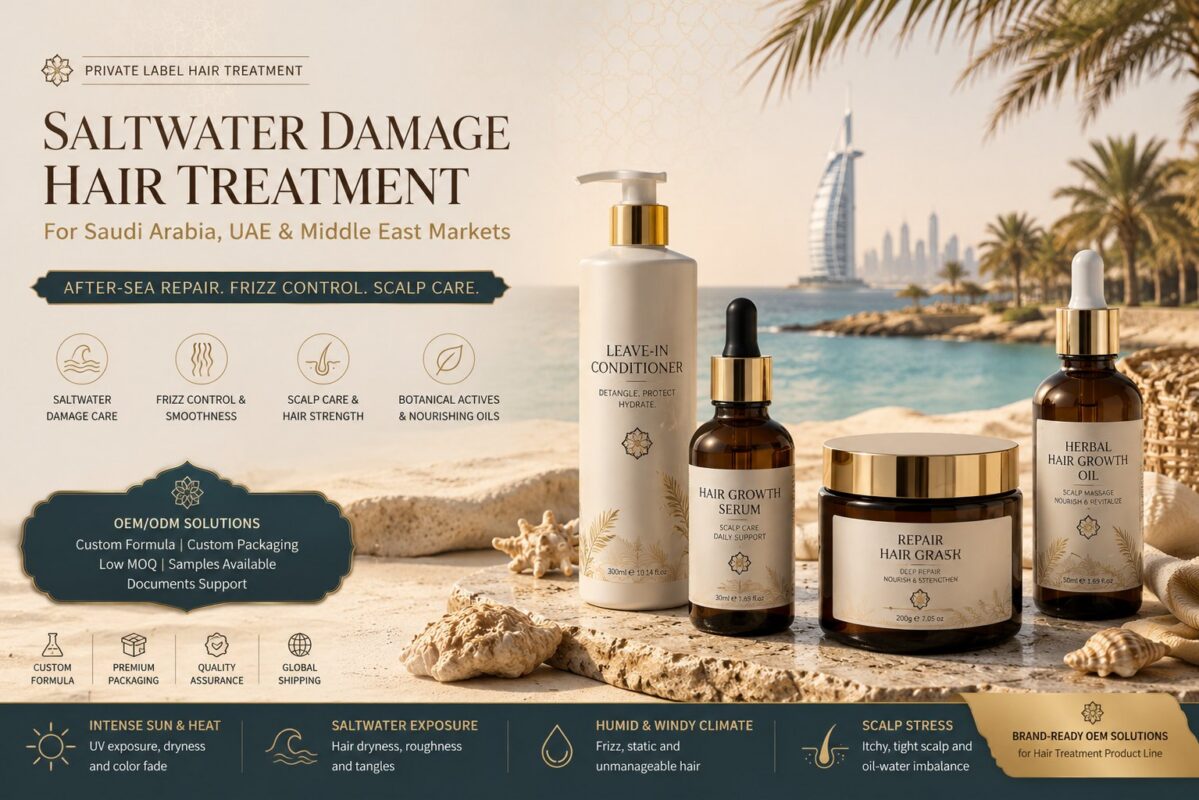
Private Label Hair Treatment Products for the Middle East: Saltwater Damage, Frizz and Scalp Care
This article explains how beauty brands, importers, distributors, salon suppliers and ecommerce sellers can develop a private label hair treatment line for Saudi Arabia, UAE and Middle East markets. It focuses on saltwater damage, frizz, dry hair, scalp care and after-sea repair, with practical product positioning for leave-in conditioner, repair hair mask, lightweight hair growth serum and herbal hair growth oil.
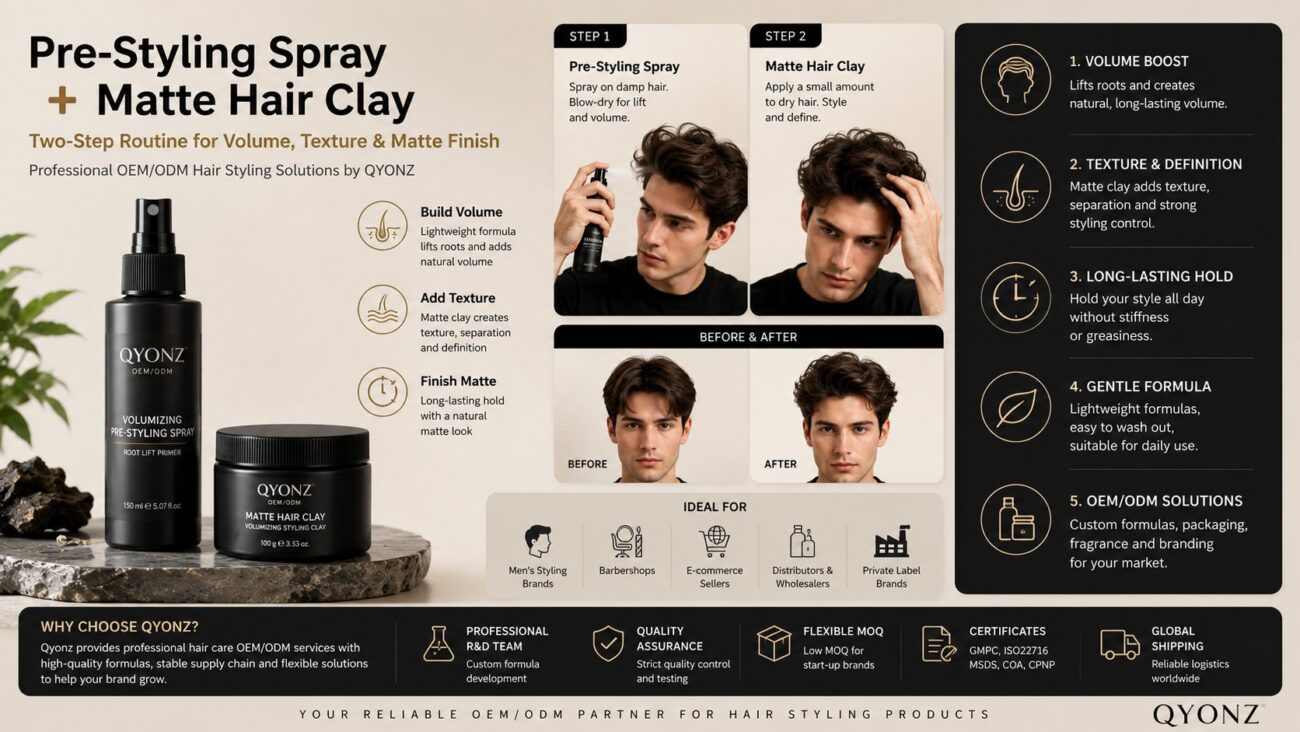
Pre-Styling Volumizing Spray and Matte Hair Clay OEM Guide for Men’s Styling Brands
Learn how men's styling brands can build a two-step product line with volumizing pre-styling spray and matte hair clay. This guide covers formula direction, packaging options, MOQ factors, sample testing and OEM project planning.
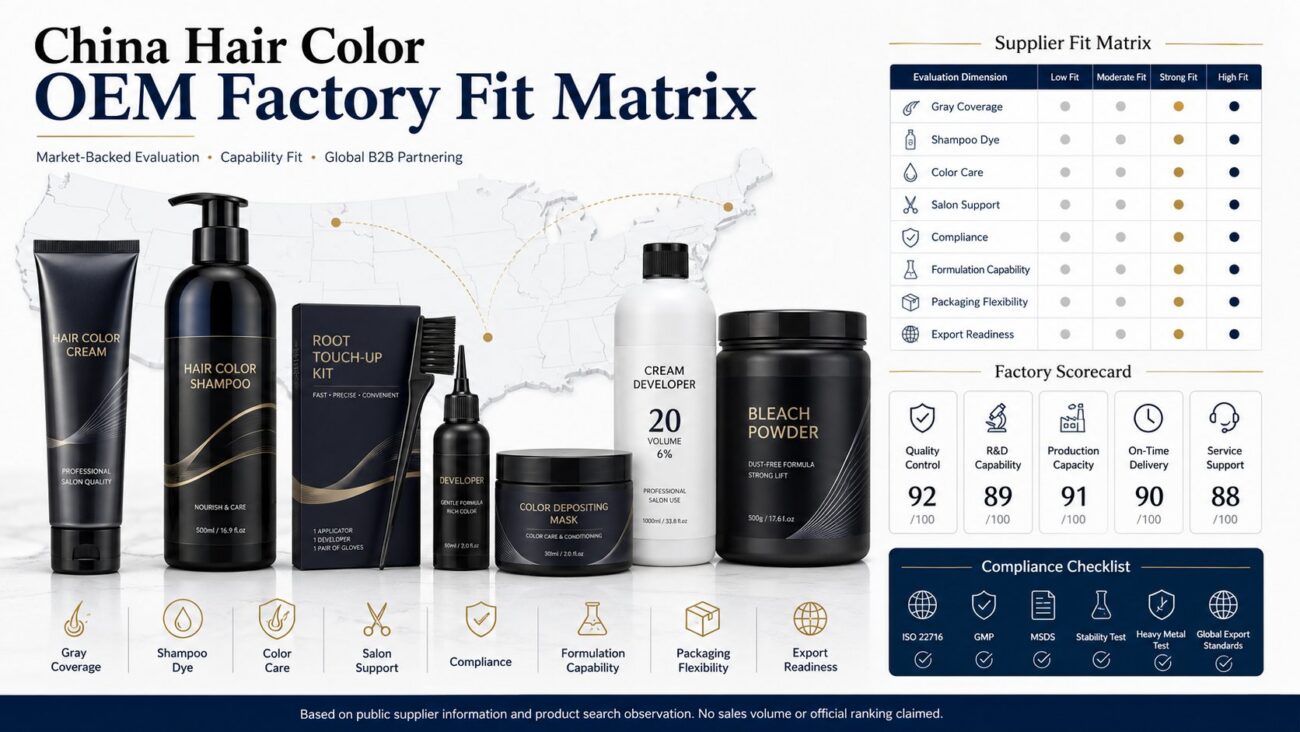
China Hair Color OEM Factories for U.S. Brands: A Supplier-Fit Ranking
This supplier-fit ranking analyzes China hair color OEM factories for U.S. private label buyers through public factory information, U.S. retail product signals, professional channel evidence and FDA hair dye compliance requirements.
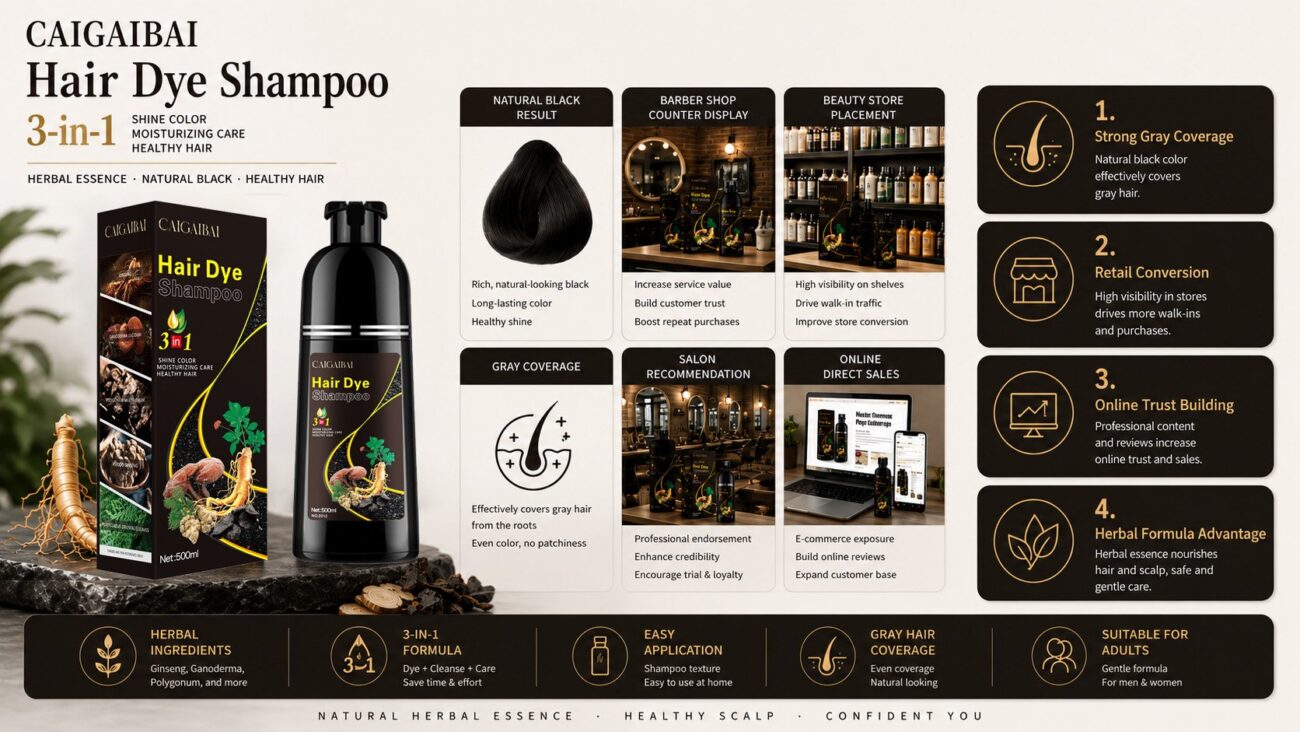
New Zealand Hair Dye Launch Data: Why Gray Coverage Needs an Offline-First Plan and the Right China OEM Factory
This data-led blog analyzes New Zealand’s gray coverage hair dye opportunity through public demographic, digital, retail, product-format and cosmetic compliance signals. It also explains what kind of China OEM/ODM factory can help importers and private label buyers turn the market plan into a producible product line.