







Posts relacionados
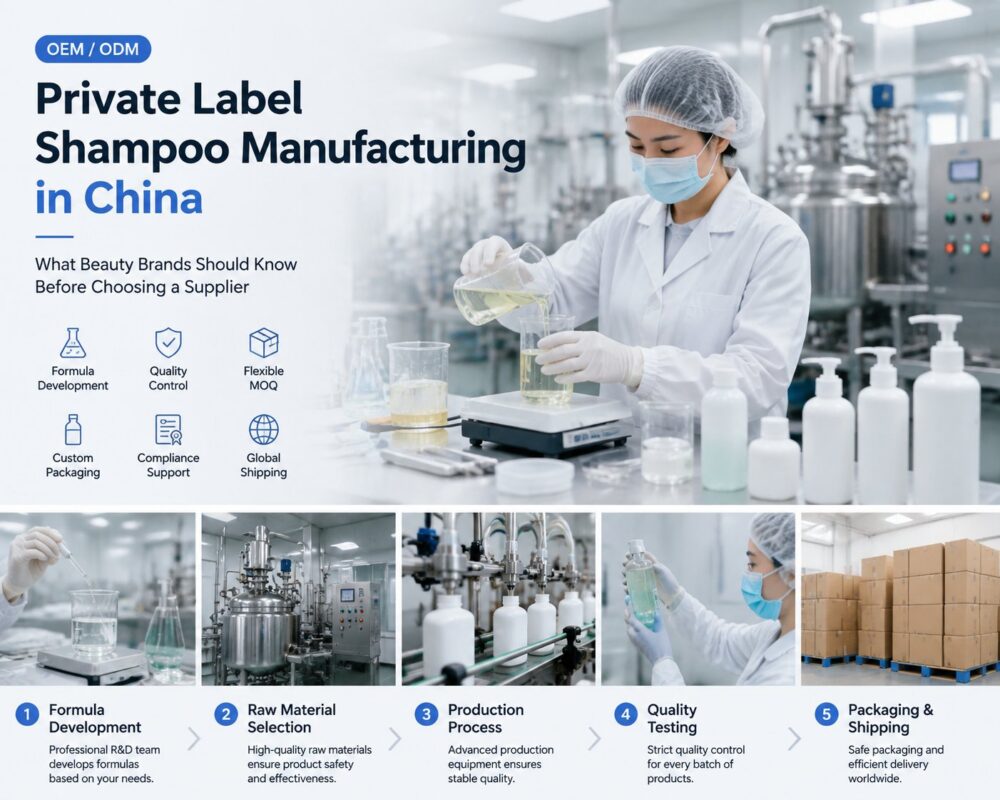
Fabrico de champôs de marca própria na China: o que as marcas de beleza devem saber antes de escolher um fornecedor

Descubra como as marcas de beleza escolhem um fabricante de champôs de marca própria na China, incluindo o desenvolvimento de fórmulas, a quantidade mínima de encomenda (MOQ), a embalagem, o controlo de qualidade, os testes e o processo de produção OEM.

Como escolher um fabricante de champô de marca própria na China
Saiba como escolher um fabricante de champô de marca própria na China, incluindo o desenvolvimento da fórmula, a quantidade mínima de encomenda (MOQ), a embalagem, os testes, a conformidade e o processo de produção OEM.
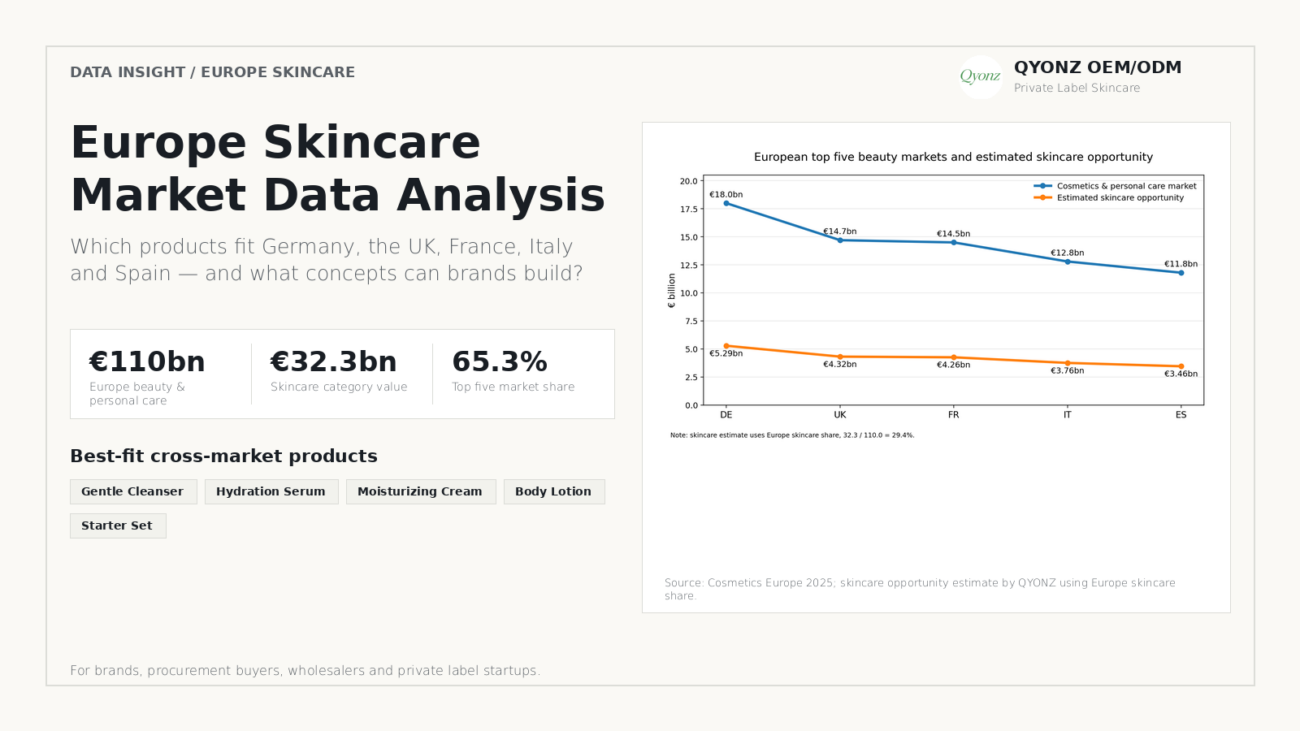
Análise de dados do mercado dos cuidados com a pele em cinco países europeus: quais são os produtos adequados para o desenvolvimento na Alemanha, no Reino Unido, em França, em Itália e em Espanha?
Este artigo analisa as oportunidades de produtos em cinco mercados europeus-chave de cuidados da pele — Alemanha, Reino Unido, França, Itália e Espanha — com base em dados de mercado. Ao examinar fatores como a dimensão do mercado, estimativas de oportunidades, adequação do produto ao mercado, adequação do conceito ao mercado e desenvolvimento de marcas próprias OEM/ODM, o artigo ajuda marcas, compradores, grossistas e startups do setor dos cuidados da pele a identificar os produtos mais adequados para mercados europeus específicos e a traduzir os dados em estratégias concretas de desenvolvimento de produtos para os cuidados da pele.
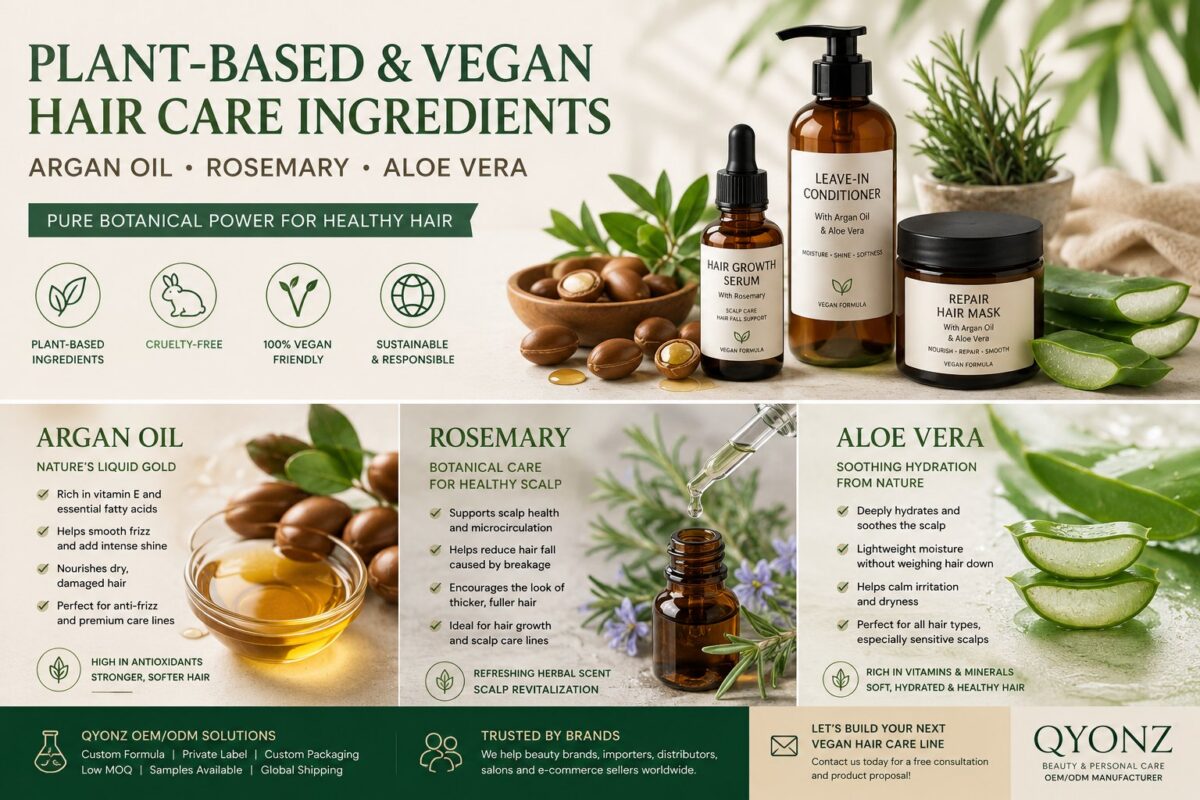
Ingredientes para produtos de cuidados capilares veganos de marca própria: óleo de argão, alecrim e aloé vera para marcas internacionais
Este artigo explica como as marcas de beleza, importadores, distribuidores, salões de beleza e vendedores de comércio eletrónico podem utilizar óleo de argão, alecrim e aloé vera para criar linhas práticas de produtos de cuidados capilares à base de plantas e veganos. Aborda o posicionamento dos ingredientes, a verificação das alegações veganas, a estratégia da linha de produtos, o valor do canal de distribuição e o apoio da Qyonz em matéria de OEM/ODM.
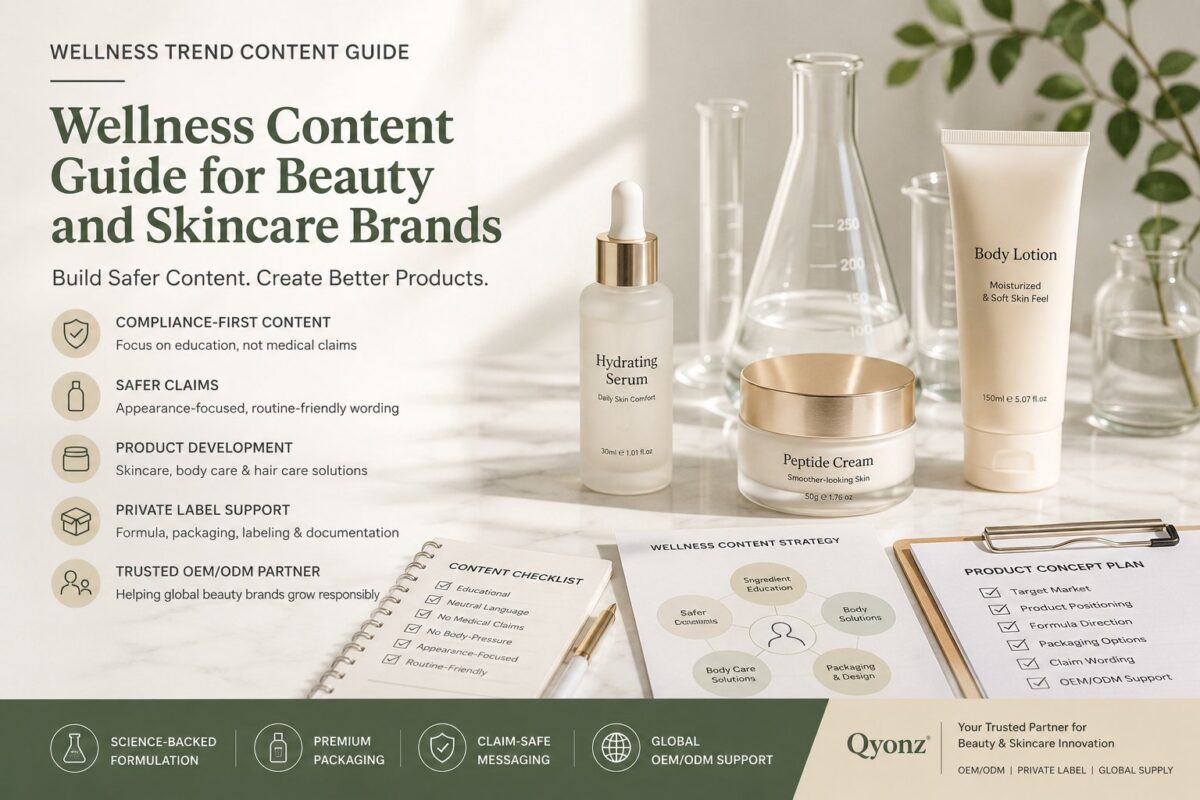
Guia de conteúdos sobre tendências de bem-estar para marcas de beleza e cuidados com a pele
Os temas relacionados com o bem-estar estão a ganhar cada vez mais destaque nas discussões sobre beleza, cuidados com a pele, cuidados com o corpo e estilo de vida dos consumidores. Para as marcas de beleza, a chave está na criação de conteúdos educativos, neutros e sem alegações exageradas, que apoiem um posicionamento responsável dos produtos, sem fazer promessas de natureza médica, relativas a resultados corporais ou à aparência pessoal. Este guia explica como as marcas podem construir estruturas de conteúdo mais seguras para temas sensíveis em matéria de bem-estar, incluindo as conversas de mercado relacionadas com o GLP-1.
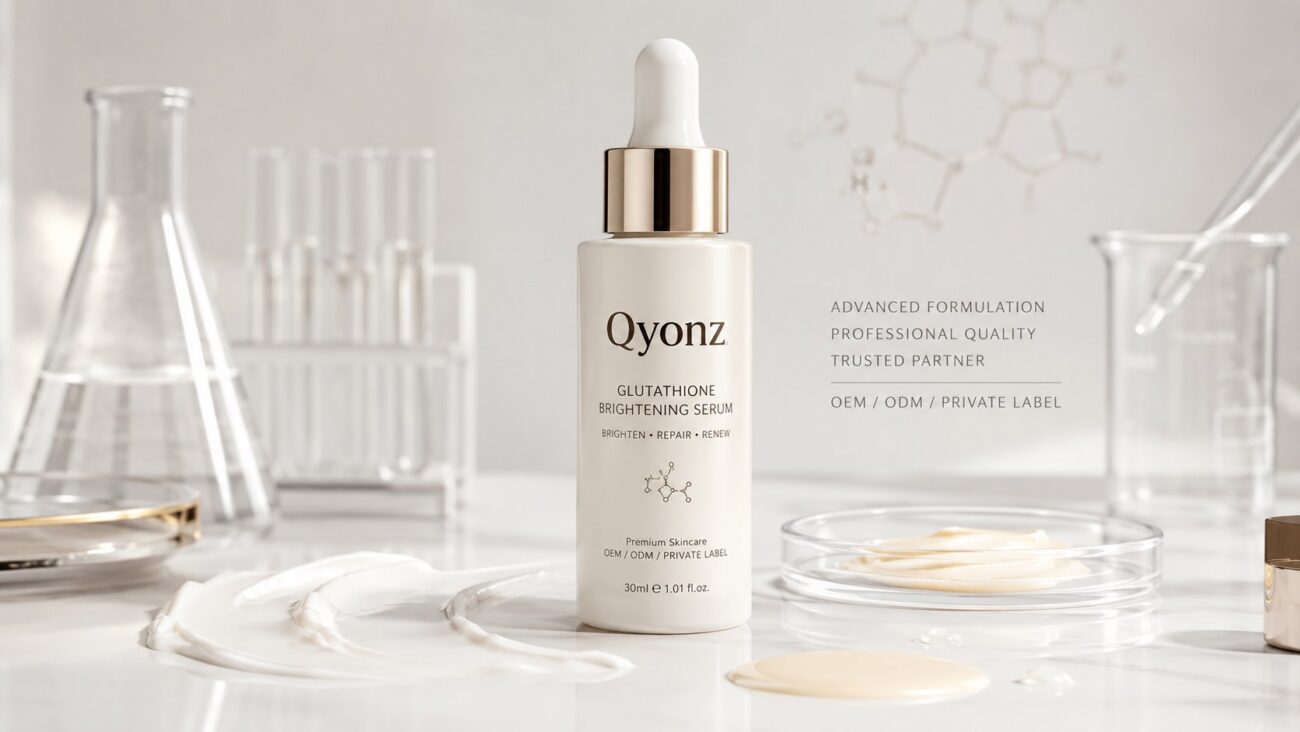
O que é a glutationa nos cuidados com a pele? Um guia de formulação B2B
A glutationa tem vindo a ser cada vez mais utilizada em produtos de cuidados da pele destinados a promover o brilho, incluindo séruns, cremes, máscaras e loções corporais. Para as marcas de beleza, o verdadeiro valor reside não só no nome do ingrediente, mas também no formato do produto, na combinação de ingredientes, na formulação segura das alegações, na estratégia de embalagem e no plano de desenvolvimento OEM/ODM. Este artigo explica como as marcas podem desenvolver produtos de cuidados da pele à base de glutationa com uma abordagem de formulação B2B, apoiada no contexto de mercado, na análise da intenção de pesquisa, em referências de conformidade e em tabelas práticas de desenvolvimento de produtos.
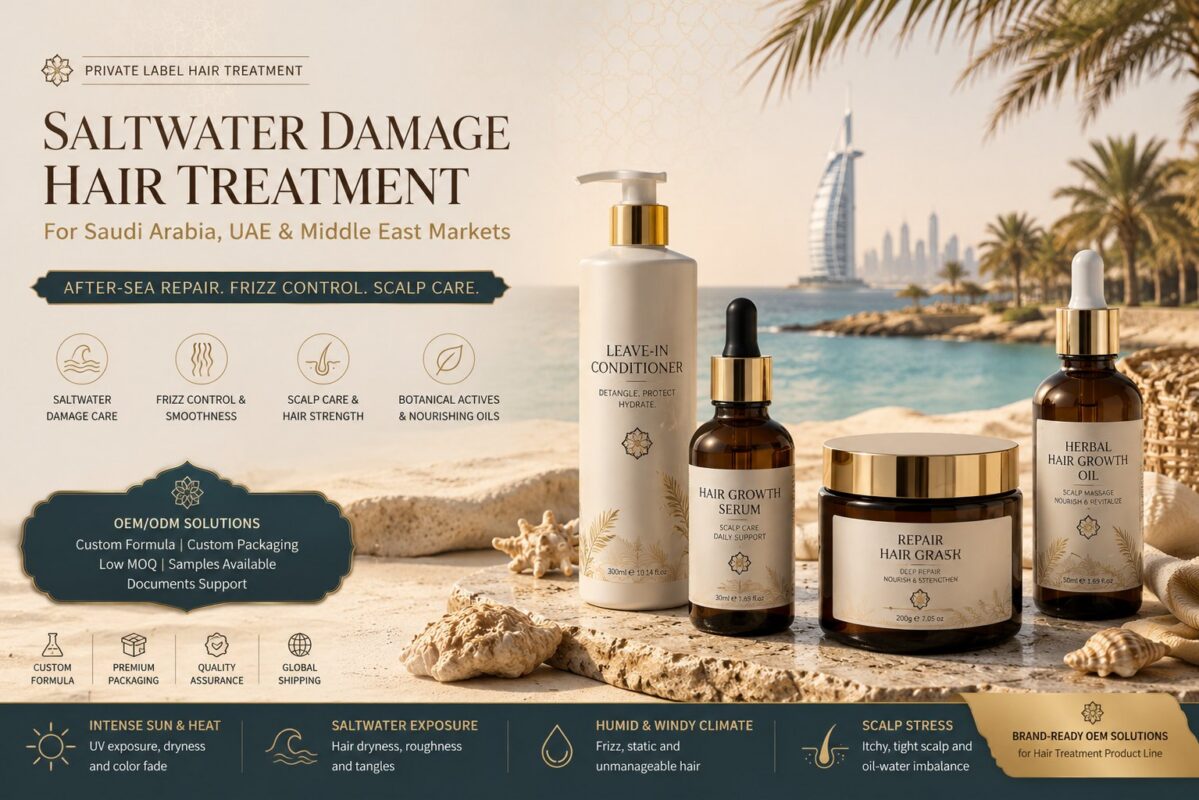
Produtos de tratamento capilar de marca própria para o Médio Oriente: danos causados pela água salgada, frizz e cuidados com o couro cabeludo
Este artigo explica como as marcas de beleza, importadores, distribuidores, fornecedores de salões de beleza e vendedores de comércio eletrónico podem desenvolver uma linha de tratamentos capilares de marca própria para os mercados da Arábia Saudita, dos Emirados Árabes Unidos e do Médio Oriente. Centra-se nos danos causados pela água salgada, no frizz, no cabelo seco, nos cuidados com o couro cabeludo e na reparação pós-banho de mar, com um posicionamento prático dos produtos, nomeadamente condicionador sem enxaguamento, máscara capilar reparadora, sérum leve para o crescimento do cabelo e óleo à base de ervas para o crescimento do cabelo.
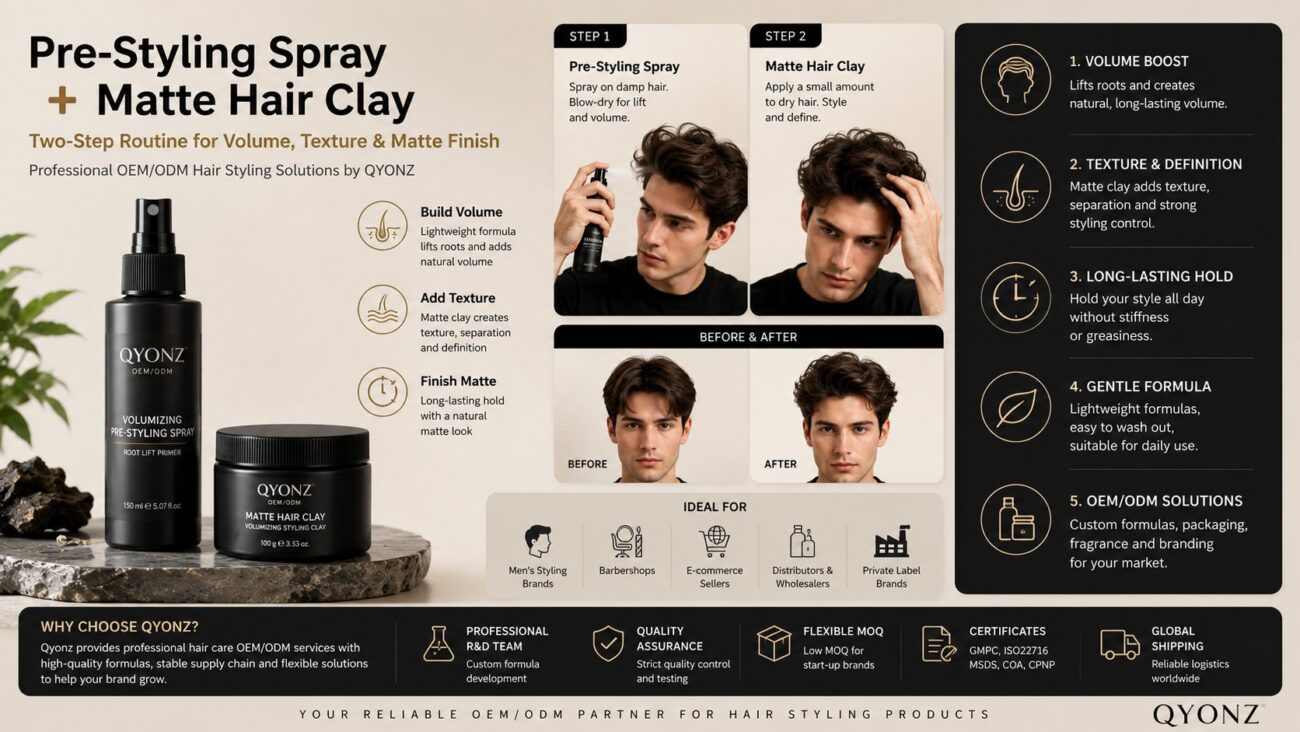
Guia OEM sobre o spray volumizador pré-modelador e a argila matificante para o cabelo, destinado a marcas de produtos de modelagem para homem
Descubra como as marcas de produtos de styling para homem podem criar uma linha de produtos em duas etapas, com um spray pré-styling volumizador e uma argila capilar mate. Este guia aborda as orientações relativas à fórmula, as opções de embalagem, os fatores relacionados com a quantidade mínima de encomenda (MOQ), os testes de amostras e o planeamento de projetos OEM.
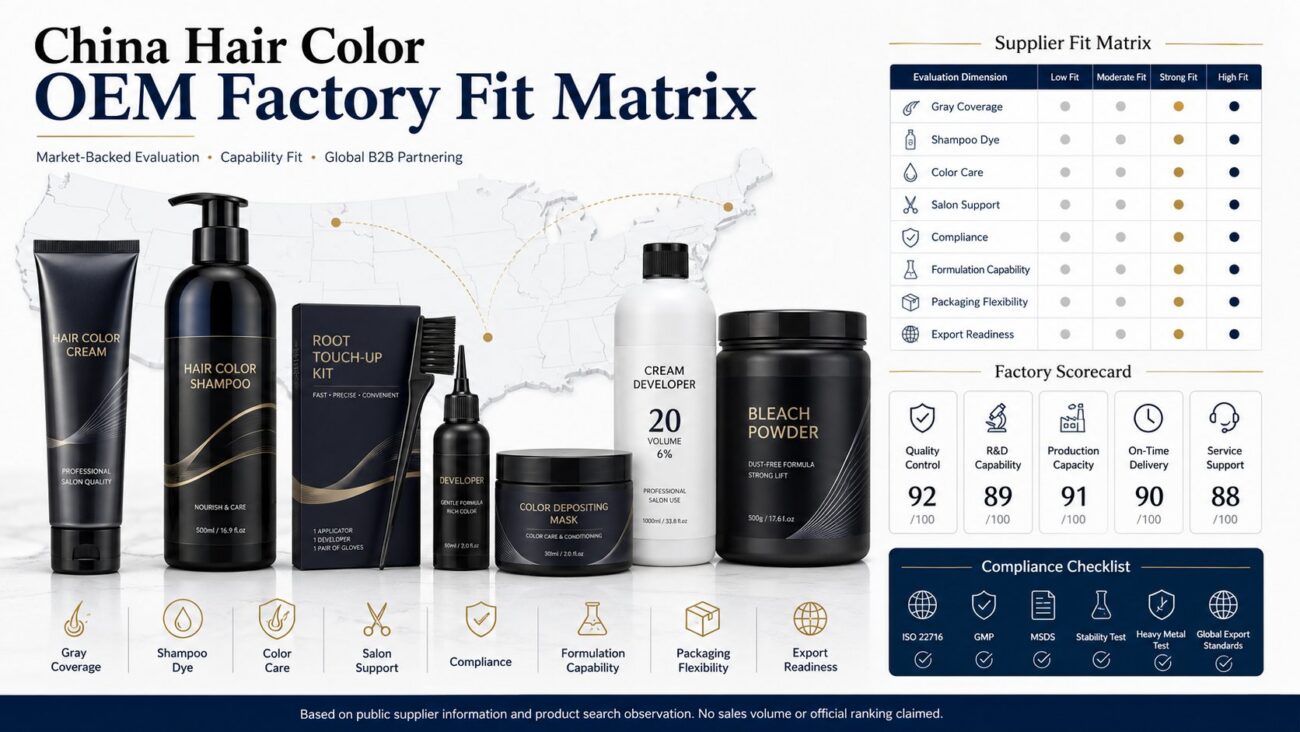
Fábricas OEM de tintas para o cabelo na China para marcas norte-americanas: um ranking de adequação de fornecedores
Esta classificação de adequação de fornecedores analisa as fábricas chinesas de tintas para o cabelo que operam como OEM para compradores de marcas próprias dos EUA, com base em informações públicas sobre as fábricas, sinais de produtos no retalho norte-americano, dados do canal profissional e requisitos de conformidade da FDA relativos às tintas para o cabelo.
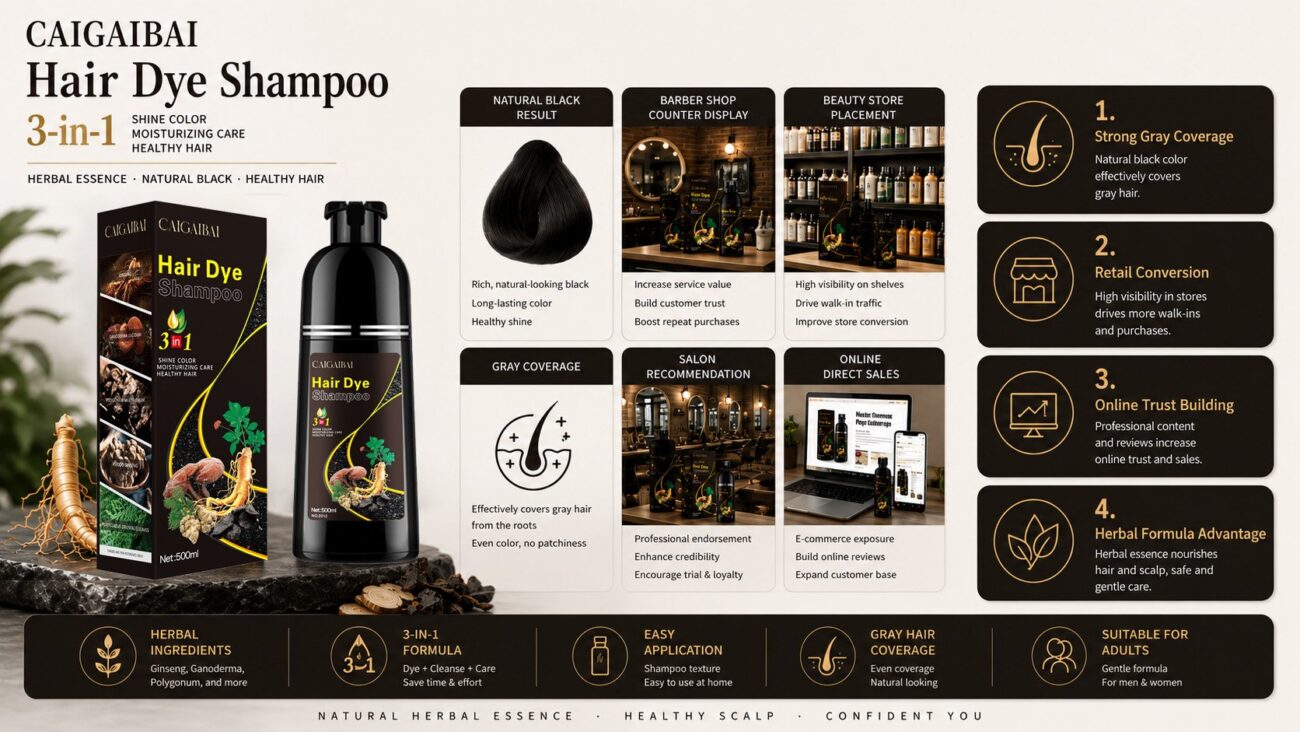
Dados sobre o lançamento de uma tintura de cabelo na Nova Zelândia: Por que a cobertura dos cabelos brancos requer um plano que dê prioridade ao mercado offline e a escolha da fábrica OEM adequada na China
Este blogue baseado em dados analisa a oportunidade de mercado das tintas para cabelos para cobrir cabelos grisalhos na Nova Zelândia, através de indicadores demográficos públicos, digitais, de retalho, de formatos de produto e de conformidade com a regulamentação cosmética. Explica também que tipo de fábrica OEM/ODM na China pode ajudar os importadores e os compradores de marcas próprias a transformar o plano de mercado numa linha de produtos viável.
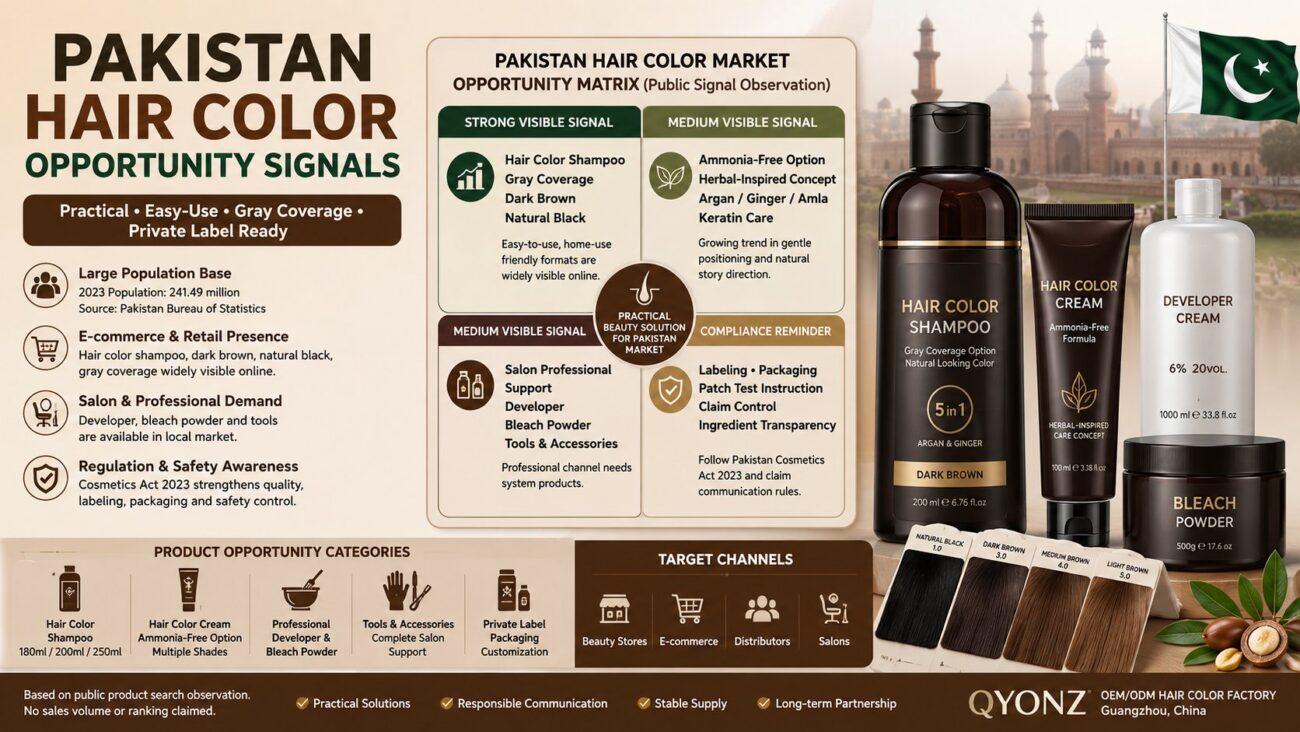
Mercado de champôs para coloração capilar no Paquistão: o que os compradores B2B devem saber antes de lançarem uma linha de marca própria
A Pakistan apresenta sinais de produto visíveis ao público para champôs de coloração capilar, nos tons castanho-escuro e preto natural, opções de cobertura de cabelos grisalhos e produtos de apoio para salões de beleza. Este guia explica como os importadores, distribuidores e marcas próprias podem planear SKUs de coloração capilar prontas para o mercado, sem recorrer a alegações de venda sem fundamento.
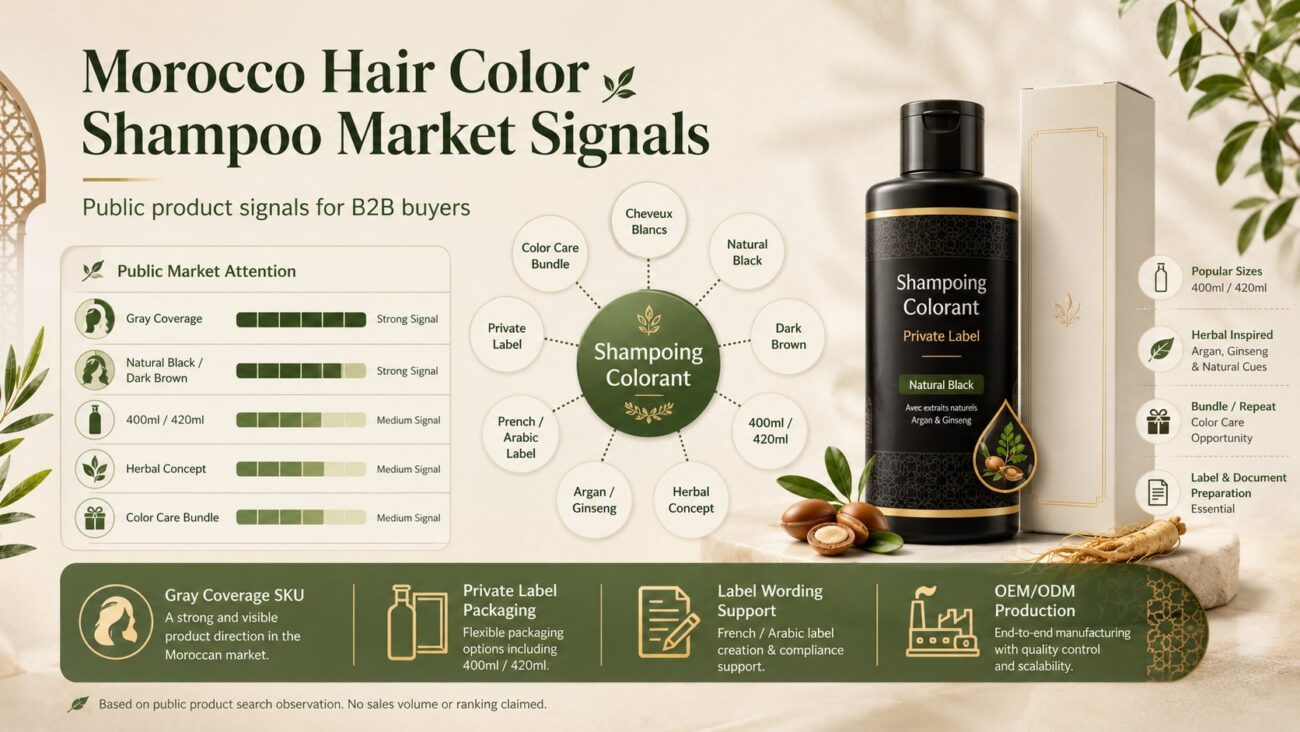
Guia do comprador de champôs para coloração capilar em Marrocos: Produtos de cobertura de cabelos grisalhos de marca própria
Um guia de compras B2B destinado aos importadores de champôs para coloração capilar de Marrocos, que abrange champôs para cobertura de cabelos grisalhos, embalagens de marca própria, planeamento de tonalidades, formulação de texto em conformidade com a legislação e produção OEM.