





From Formula to Shelf: Inside the QYONZ Manufacturing Process for Clean Beauty (EU & Retail-Ready)

0

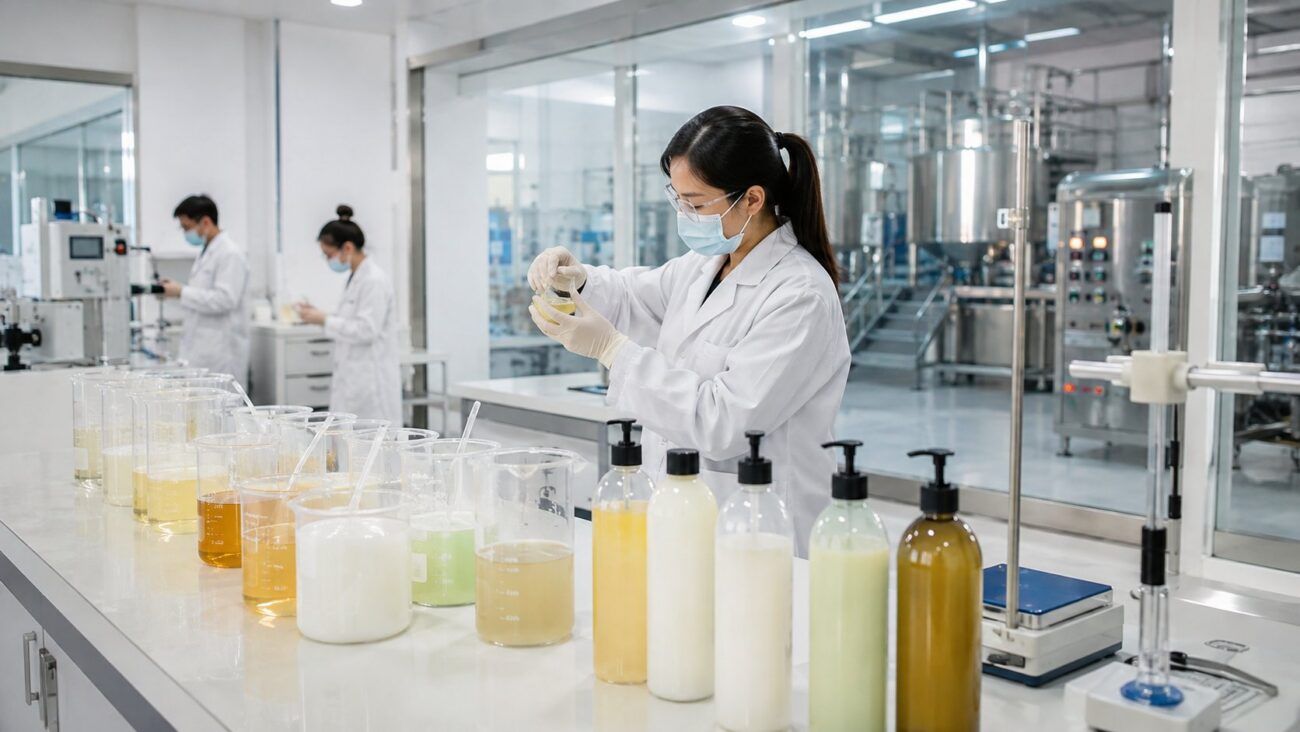
03:12 AM. The lab is quiet, but the lights are still on.

Not because we’re chasing a trendy claim—because a retail compliance checklist doesn’t care about trends. It cares about traceability, repeatability, 以及 proof.

In 2026, “Clean Beauty” is no longer a buzzword. For many retailers and global markets, it functions as a non-negotiable baseline: ingredient transparency, restricted-substance screening, and audit-ready documentation. Compliance teams are no longer asking only “What’s inside the bottle?”—they ask:

  • Where did every key raw material come from?
  • How is each batch controlled and recorded?
  • Can the manufacturer provide SDS/COA and traceable QC artifacts—fast?
  • Will the product withstand retail scrutiny and regulatory review?

The Challenger: “Made in China” Is Not a Compliance Risk—Opaque Manufacturing Is

A persistent stereotype suggests manufacturing in China automatically means less transparency. In reality, location is not the determining factor. Process discipline is.

At QYONZ, we operate on a simple principle:

Clean Beauty is not a claim. It’s a system.
A system built on documented controls, traceable QA, and evidence you can hand to a retailer or auditor.

What “Clean Beauty” Means in Procurement & Compliance Terms

Every retailer and market applies its own restricted ingredient approach. Instead of treating clean beauty as a marketing story, compliance teams translate it into operational requirements such as:

  • Ingredient transparency (clear INCI nomenclature, allergen notes where applicable)
  • Restricted-substance alignment (market/retailer lists and internal policies)
  • Batch consistency (repeatable specs, controlled changes)
  • Documentation readiness (SDS, COA, and traceable QC records)
  • Packaging & labeling control (compatibility testing + labeling accuracy)

The QYONZ Transparency Stack (What You Can Actually Verify)

“Transparency” is only meaningful when it produces artifacts. A compliance-ready manufacturing partner should be able to provide:

  • SDS (Safety Data Sheet)
  • COA (Certificate of Analysis) per batch
  • Traceable batch records and QC checkpoints
  • Ingredient disclosure documentation aligned to target markets
  • Stability and compatibility notes (as defined in your project scope)

This is how we reduce “unknowns” in clean beauty private label hair care sourcing—and how we help retail teams approve faster.

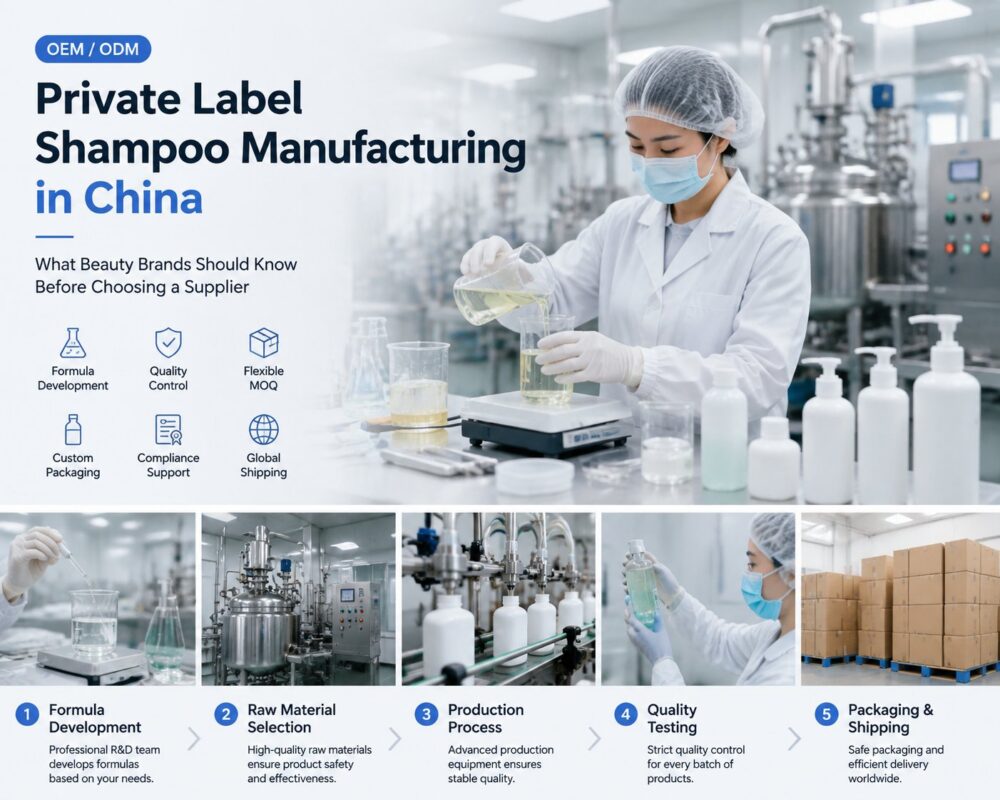
From Formula to Shelf: The 5-Step QYONZ Process for Clean Beauty

Step 1: Concept & R&D Requirement Mapping

The journey starts in the lab, not on the production floor. We translate your brand brief into a technical roadmap:

  • Target market requirements (EU/US/retailer policies)
  • Claim direction (e.g., vegan, silicone-free, sulfate-free—based on your strategy)
  • Ingredient approach and sourcing logic
  • Packaging format and dispensing goals

Output: a clear development plan your compliance team can review before sampling begins.

Step 2: Lab Sampling & Iteration (With Data, Not Guesswork)

We don’t rush to scale. Most clean beauty projects require 2–3 rounds of sampling to balance performance, sensory feel, and compliance constraints.

Each iteration can be accompanied by project-relevant documentation such as:

  • INCI/ingredient naming clarity
  • Viscosity notes and sensory targets
  • Thermal/color stability observations (as scoped)
  • Packaging compatibility feedback (pump/sprayer/bottle interaction)

Output: a formula direction that’s stable, repeatable, and easier to approve.

Step 3: ISO/GMP-Aligned Production Controls

Once the formula is locked, scale-up happens under disciplined manufacturing controls. Compliance is not an add-on—it’s the baseline.

Batch production should include:

  • Recorded compounding and process checkpoints
  • QC checks aligned to your agreed specifications
  • COA for the finished batch
  • SDS availability for downstream documentation workflows

Output: audit-friendly manufacturing that reduces retailer friction.

Step 4: Packaging, Labeling & Export Support

In clean beauty, packaging is part of compliance: compatibility, leakage control, label accuracy, and the ability to provide documentation quickly.

QYONZ can support:

  • Packaging sourcing and compatibility checks (as defined)
  • High-resolution label printing workflows
  • Export documentation support and DDP options where available/appropriate

Output: fewer surprises between factory and warehouse.

Step 5: After-Sales Partnership & Change Control

Retail-grade manufacturing continues after launch. The brands that scale are the brands that manage change responsibly:

  • Feedback monitoring and improvement planning
  • Reorder forecasting to prevent stockouts
  • Controlled formula/packaging updates (with documentation continuity)

Output: stability at scale—without compliance drift.

Innovation Case Study: “EU-Aligned Clean Styling” Without the Typical Tradeoffs

A retail-focused brand approached us with a challenge: develop a high-performance, vegan styling spray concept that avoids the typical “dry, crunchy” feel of older texture systems—while aligning with EU-oriented compliance expectations and documentation workflows.

Our approach wasn’t to force marketing claims. It was to build a compliance-first roadmap:

  • Defined market requirements and documentation expectations up front
  • Iterated lab samples until performance and feel met the brief
  • Validated packaging compatibility so the on-shelf experience matched the lab result
  • Prepared an evidence trail (SDS/COA + QC artifacts) designed for compliance review

Result: a shelf-ready SKU concept where “clean beauty” isn’t a label—it’s supported by process control and proof.

EU-Aligned Compliance Checklist (Copy/Paste for Your OEM Evaluation)

  • Documentation: SDS + COA per batch; ingredient disclosure workflow
  • Traceability: batch records; QC checkpoints; controlled change history
  • Quality Controls: microbial controls (as scoped); fill weights; spec conformity
  • Stability & Compatibility: defined testing scope + packaging interaction checks
  • Labeling Support: INCI accuracy; market-specific labeling considerations (as provided by brand/RP where required)
  • Scale Reliability: consistent reorders without batch drift

FAQ (SGE-Friendly)

What does “clean beauty private label hair care” mean for compliance teams?

It typically means the product is developed with ingredient transparency, restricted-substance alignment, and documentation that supports audits—rather than relying on vague “natural” positioning.

What should I request from an EU compliant haircare OEM?

Start with SDS and COA, then confirm batch traceability, QC checkpoints, and a documentation workflow that supports your EU-oriented compliance process (often involving a Responsible Person and PIF requirements managed on the brand side).

Is ISO 22716/GMP enough to guarantee EU compliance?

Certifications and GMP discipline strengthen manufacturing control, but EU compliance also depends on your market pathway (e.g., Responsible Person, CPSR/PIF processes). A strong OEM should support the documentation and traceability needed for that pathway.

Why do retailers care so much about manufacturing transparency now?

Because ingredient restrictions, consumer scrutiny, and audit processes are getting stricter. Transparency reduces risk—delisting, rework, delays, and reputational damage.

We Don’t Hide Where We Manufacture—We Show How We Manufacture

Clean beauty is built on trust, and trust is built on proof. That’s why QYONZ focuses on transparency artifacts, repeatable controls, and compliance-ready workflows.

Next step: contact QYONZ to request a clean beauty manufacturing roadmap (documentation list, sampling plan, and production/QC workflow) for your next private label hair care launch.

From Lab to Market — We Manufacture Trust & Growth.

發佈留言

發佈留言必須填寫的電子郵件地址不會公開。 必填欄位標示為 *