

为什么现在流行无氨染发剂?
无氨染发已成为独立品牌和沙龙品牌中增长最快的需求之一。消费者越来越多地将氨与强烈气味、头皮刺激和长期头发损伤联系在一起。.
然而,从生产角度来看,无氨系统是 复杂得多 比传统的永久性染发效果更好。.
这就是与
无氨染发剂背后的技术挑战
传统上,氨有助于打开头发角质层,使色素渗透。去除氨水会带来以下挑战
- 减少色素渗透
- 色彩效果不均匀
- 灰度覆盖率较低
- 保质期内的稳定性问题
专业的原始设备制造商会重新设计整个配方系统,而不是简单地去除氨。.
OEM 实验室如何配制无氨系统
经验丰富的 OEM 实验室通常依靠
- 具有缓冲 pH 值控制功能的替代碱化剂
- 优化颜料粒径,提高渗透性
- 调理聚合物可降低着色后的干燥度
- 受控氧化系统可实现一致的显色效果
如果没有这种配方专业知识,无氨产品在实际使用中往往表现不佳。.
合规与测试仍适用
即使是无氨染发产品,也需要全面的合规支持,包括
- 稳定性测试
- 补丁测试文档
- SDS 和 COA 准备
无论批量大小,这些要求都适用。.
相关阅读
如果您正在评估支持低 MOQ 的合规染发剂产品生产合作伙伴、,
请参阅我们的染发剂 OEM 生产服务完整指南:
👉 https://qyonz.com/hair-color-color-depositing-products-oem-manufacturer/
相关帖子
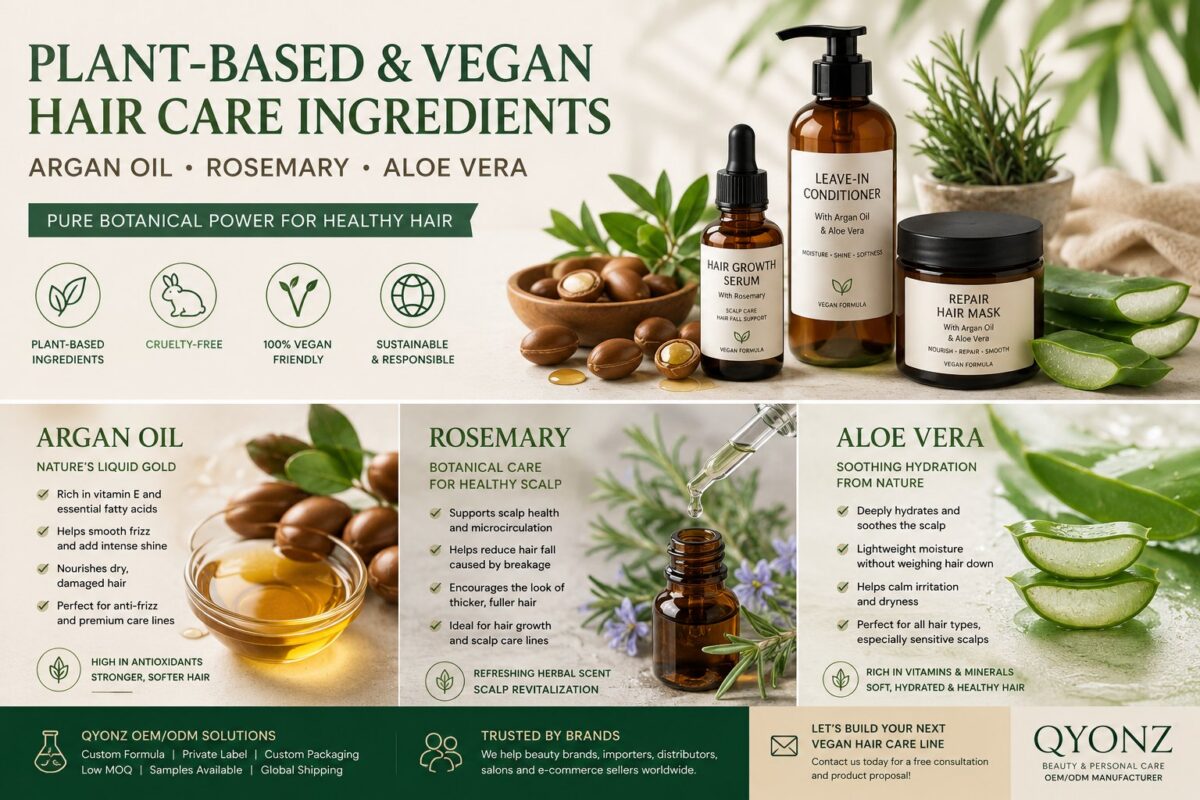
Private Label Vegan Hair Care Ingredients: Argan Oil, Rosemary and Aloe Vera for Global Brands
This article explains how beauty brands, importers, distributors, salons and ecommerce sellers can use argan oil, rosemary and aloe vera to build practical plant-based and vegan hair care product lines. It covers ingredient positioning, vegan claim checks, product line strategy, channel value and Qyonz OEM/ODM support.
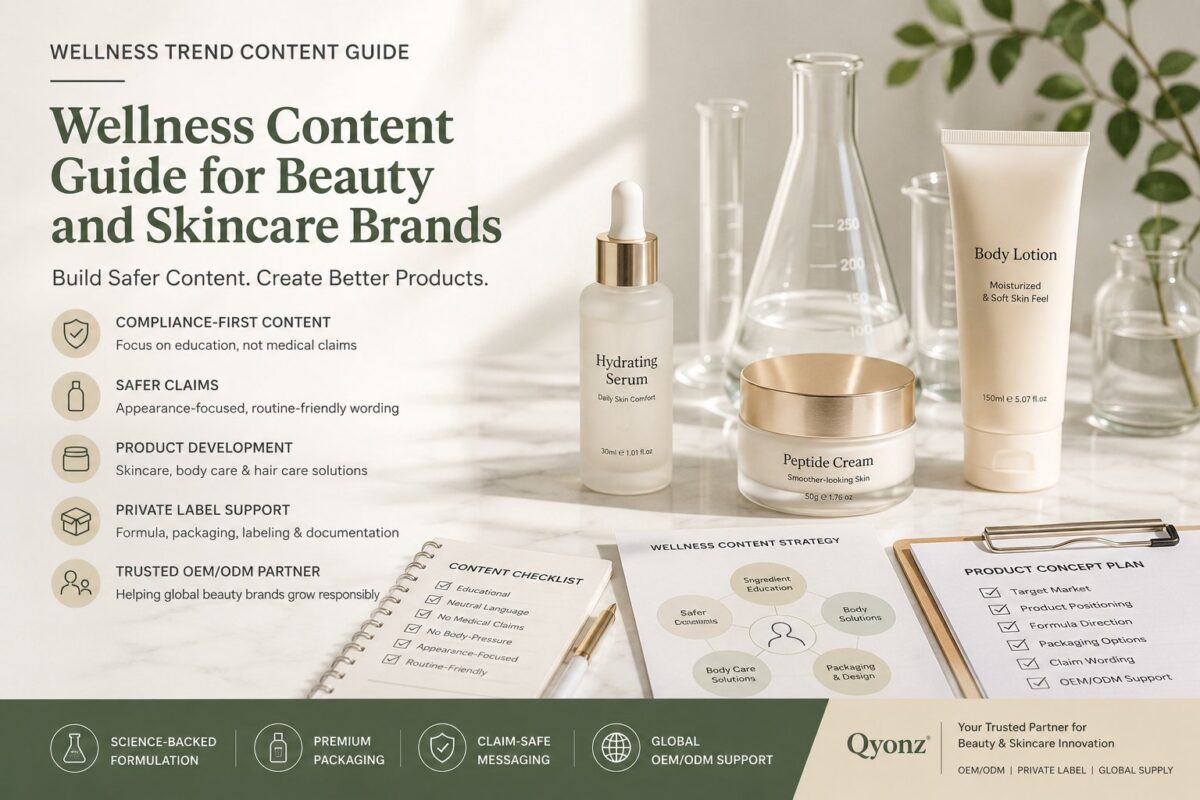
Wellness Trend Content Guide for Beauty and Skincare Brands
Wellness-related topics are becoming more visible in beauty, skincare, body care, and consumer lifestyle discussions. For beauty brands, the key is to create educational, neutral, and claim-safe content that supports responsible product positioning without making medical, body-result, or personal appearance promises. This guide explains how brands can build safer content frameworks for wellness-sensitive topics, including GLP-1-related market conversations.
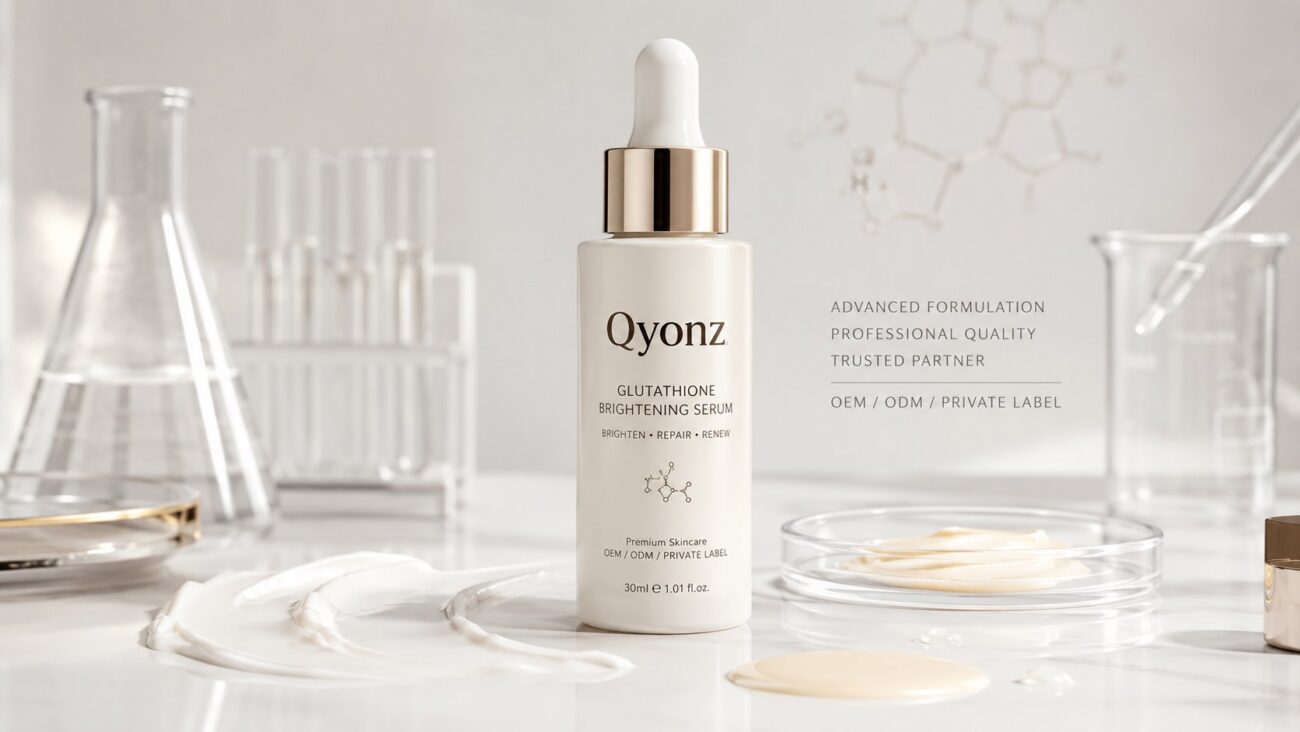
What Is Glutathione in Skincare? A B2B Formulation Guide
Glutathione is increasingly used in radiance-focused skincare, including serums, creams, masks, and body lotions. For beauty brands, the real value is not only the ingredient name but also the product format, ingredient pairing, safe claim wording, packaging strategy, and OEM/ODM development plan. This article explains how brands can develop glutathione skincare products with a B2B formulation mindset, supported by market context, search intent analysis, compliance references, and practical product development tables.
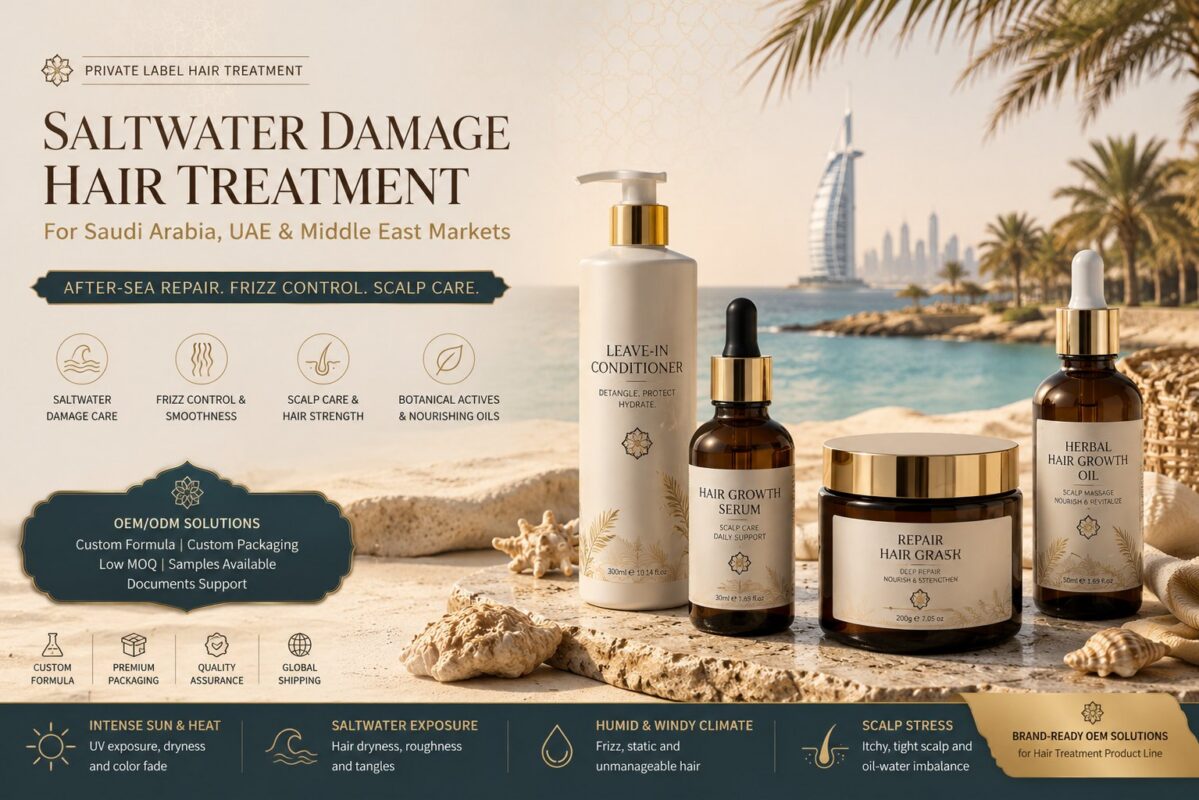
Private Label Hair Treatment Products for the Middle East: Saltwater Damage, Frizz and Scalp Care
This article explains how beauty brands, importers, distributors, salon suppliers and ecommerce sellers can develop a private label hair treatment line for Saudi Arabia, UAE and Middle East markets. It focuses on saltwater damage, frizz, dry hair, scalp care and after-sea repair, with practical product positioning for leave-in conditioner, repair hair mask, lightweight hair growth serum and herbal hair growth oil.
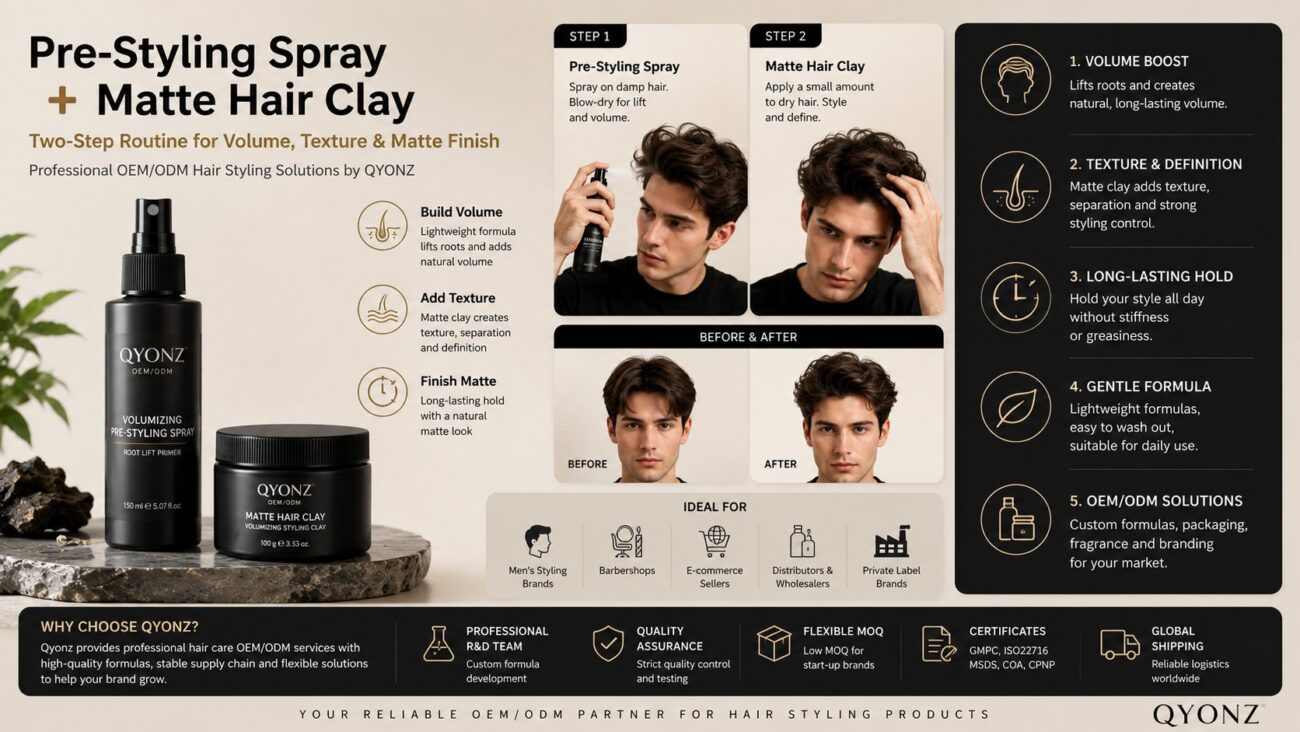
Pre-Styling Volumizing Spray and Matte Hair Clay OEM Guide for Men’s Styling Brands
Learn how men's styling brands can build a two-step product line with volumizing pre-styling spray and matte hair clay. This guide covers formula direction, packaging options, MOQ factors, sample testing and OEM project planning.
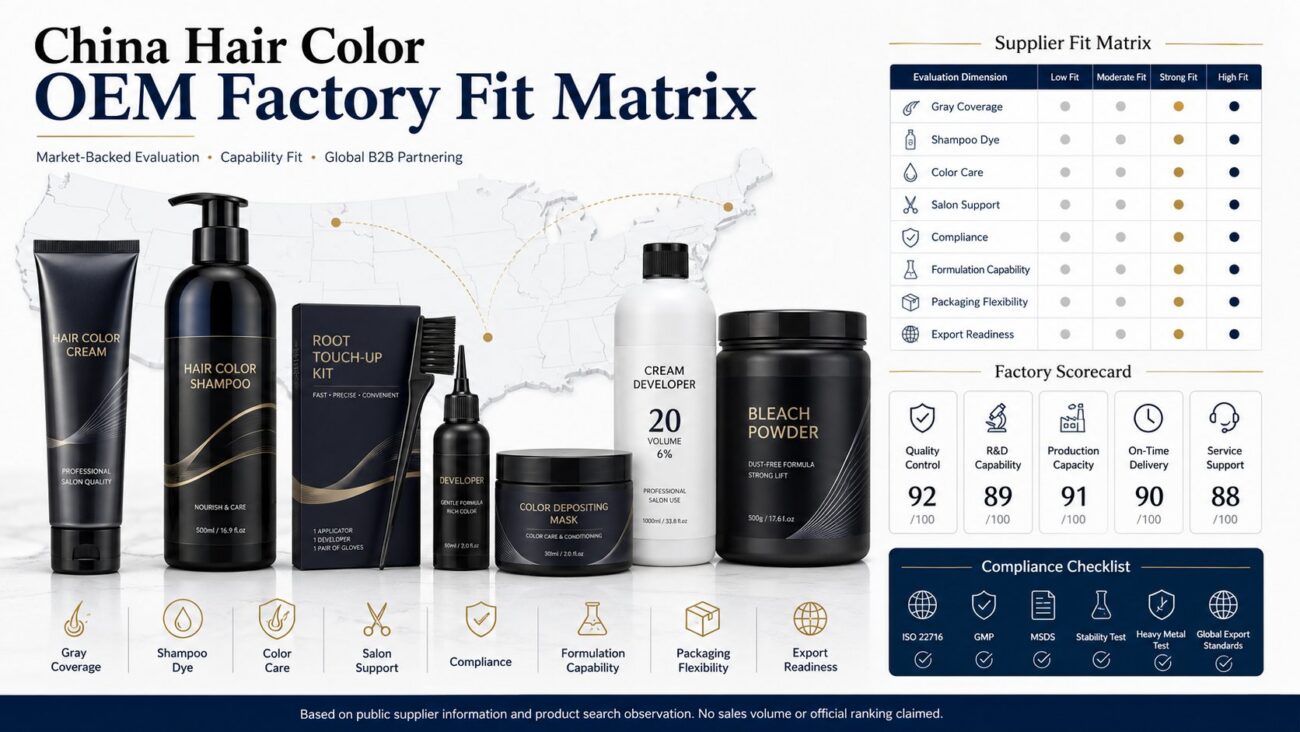
China Hair Color OEM Factories for U.S. Brands: A Supplier-Fit Ranking
This supplier-fit ranking analyzes China hair color OEM factories for U.S. private label buyers through public factory information, U.S. retail product signals, professional channel evidence and FDA hair dye compliance requirements.
New Zealand Hair Dye Launch Data: Why Gray Coverage Needs an Offline-First Plan and the Right China OEM Factory
This data-led blog analyzes New Zealand’s gray coverage hair dye opportunity through public demographic, digital, retail, product-format and cosmetic compliance signals. It also explains what kind of China OEM/ODM factory can help importers and private label buyers turn the market plan into a producible product line.
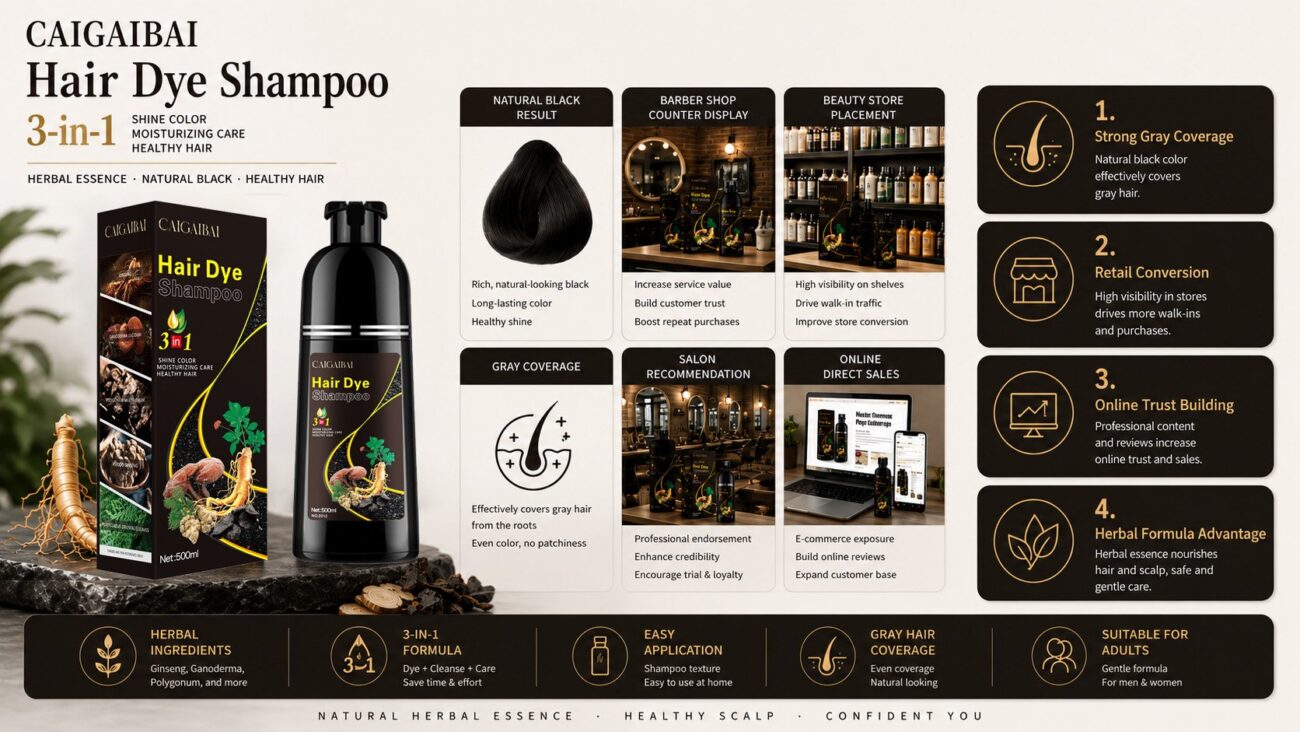
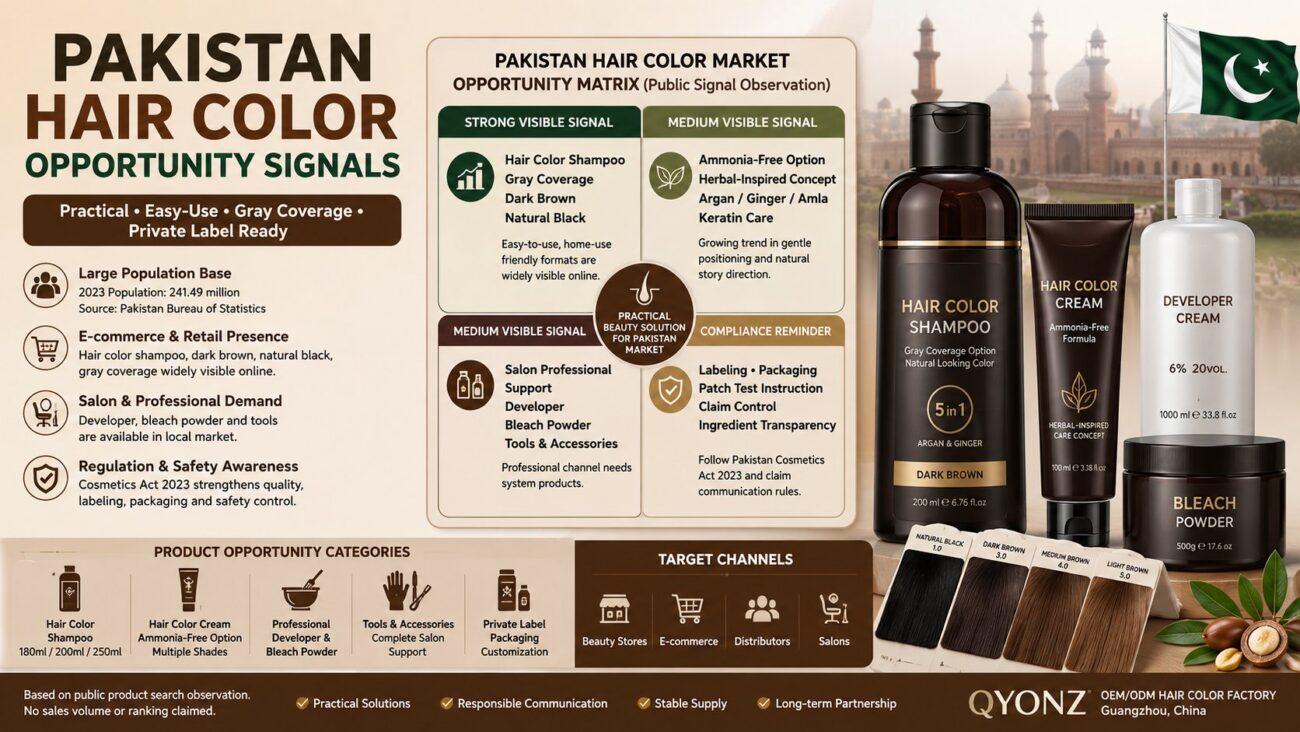
Pakistan Hair Color Shampoo Market: What B2B Buyers Should Know Before Launching a Private Label Line
Pakistan shows visible public product signals for hair color shampoo, dark brown and natural black shades, gray coverage options, and salon support products. This guide explains how importers, distributors, and private label brands can plan market-ready hair color SKUs without relying on unsupported sales claims.
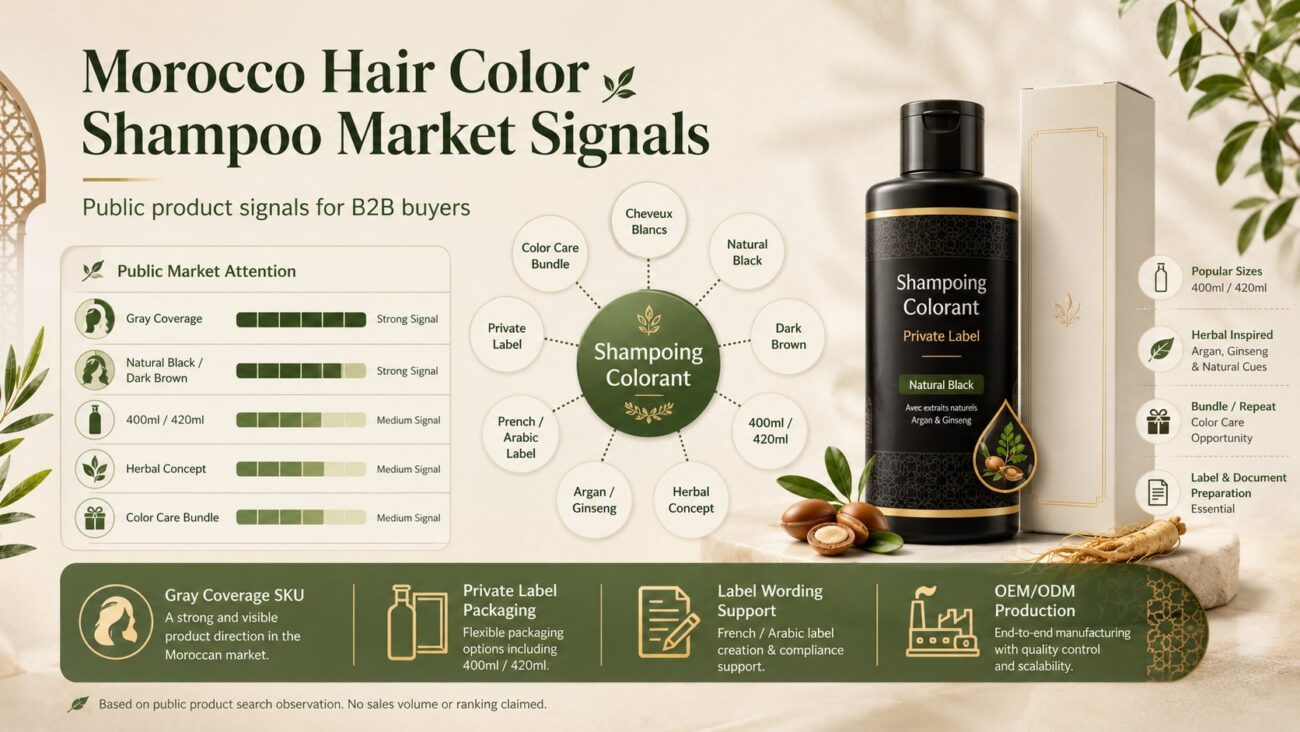
Morocco Hair Color Shampoo Buyer Guide: Private Label Gray Coverage Products
A B2B buyer guide for Morocco hair color shampoo importers, covering gray coverage shampoo, private label packaging, shade planning, compliance-aware wording and OEM production.
Private Label Hair Color Products for Kenya: How B2B Buyers Can Build a Complete Hair Dye Line
A B2B buyer guide for Kenya hair color importers, covering hair color shampoo, gray coverage products, ammonia-free dye cream, beard color, developer, bleach powder, color care and OEM private label planning.
从配方到货架:QYONZ清洁美容(欧盟和零售准备)生产流程内幕
“清洁美容 ”不再是一种营销主张,而是一种合规要求。零售商和监管机构越来越多地要求产品成分透明、生产过程可追溯、文件资料经得起审核。本文介绍了 QYONZ 如何通过五步系统将概念转化为可上架的清洁美容自有品牌护发产品:需求规划、迭代实验室测试数据取样、ISO/GMP 符合性生产控制、包装兼容性和标签支持,以及上市后的变更控制。您还将看到 “彻底透明 ”在实践中的具体表现--每批次的产品安全数据单(SDS)/产品认证证书(COA)、可追溯的质量控制记录,以及为支持欧盟统一要求而设计的文档工作流程。.
为什么 MOQ 和合规性比以往任何时候都更重要?
大多数创始人将 MOQ 视为工厂限制,但在护发产品的 OEM 生产中,MOQ 决定着单位经济效益、包装途径、库存风险和规模化速度。超低产量(100-300 件)会抬高成本并限制包装选择,而传统的 10,000 件以上的 MOQ 则会在验证产品与市场契合度之前冻结现金流。1,000 件的基线通常是运营的甜蜜点--大到足以进行稳定性测试、包装兼容性和更好的定价层级,小到足以保护运营资本。在 2026 年,合规性是第二个决定因素:ISO 22716/GMP 流程以及 SDS/COA 和成分文件可降低退市和零售拒收风险。本指南为采购团队提供了买家清单和常见问题解答,对 1,000 MOQ 战略进行了细分。.