







Puestos relacionados
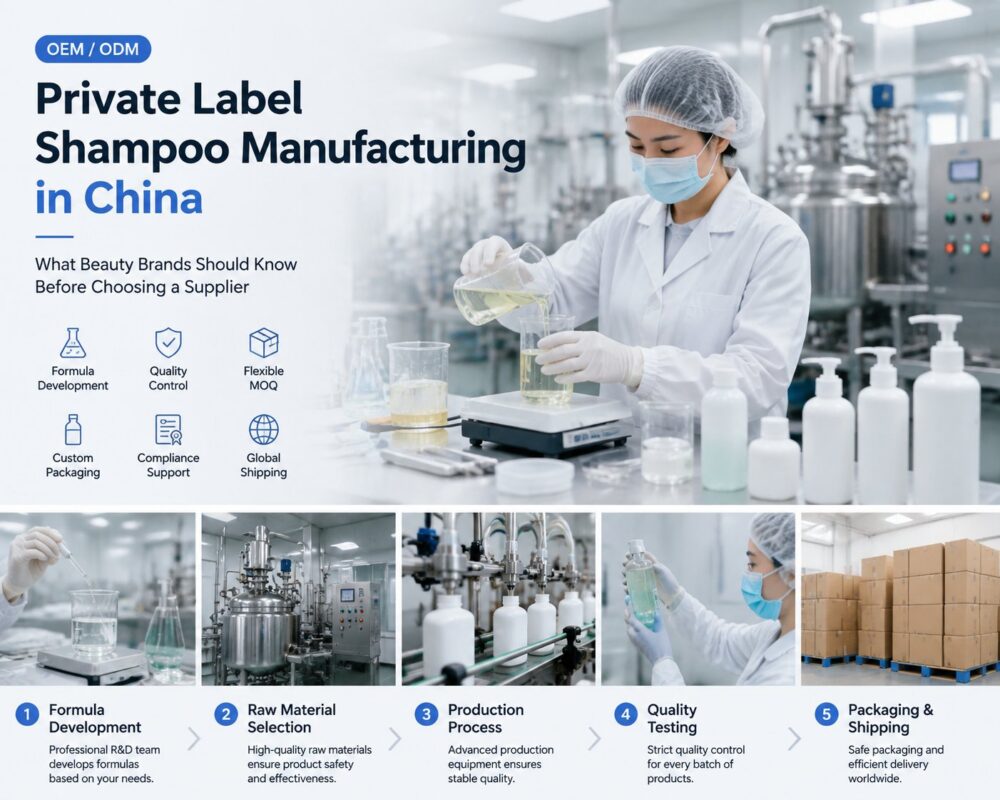
Fabricación de champús de marca blanca en China: lo que las marcas de belleza deben saber antes de elegir un proveedor

Descubre cómo las marcas de belleza eligen un fabricante de champús de marca blanca en China, incluyendo el desarrollo de fórmulas, la cantidad mínima de pedido (MOQ), el envasado, el control de calidad, las pruebas y el proceso de producción OEM.

Cómo elegir un fabricante de champú de marca blanca en China
Descubre cómo elegir un fabricante de champú de marca blanca en China, incluyendo el desarrollo de fórmulas, la cantidad mínima de pedido (MOQ), el envasado, las pruebas, el cumplimiento normativo y el proceso de producción OEM.
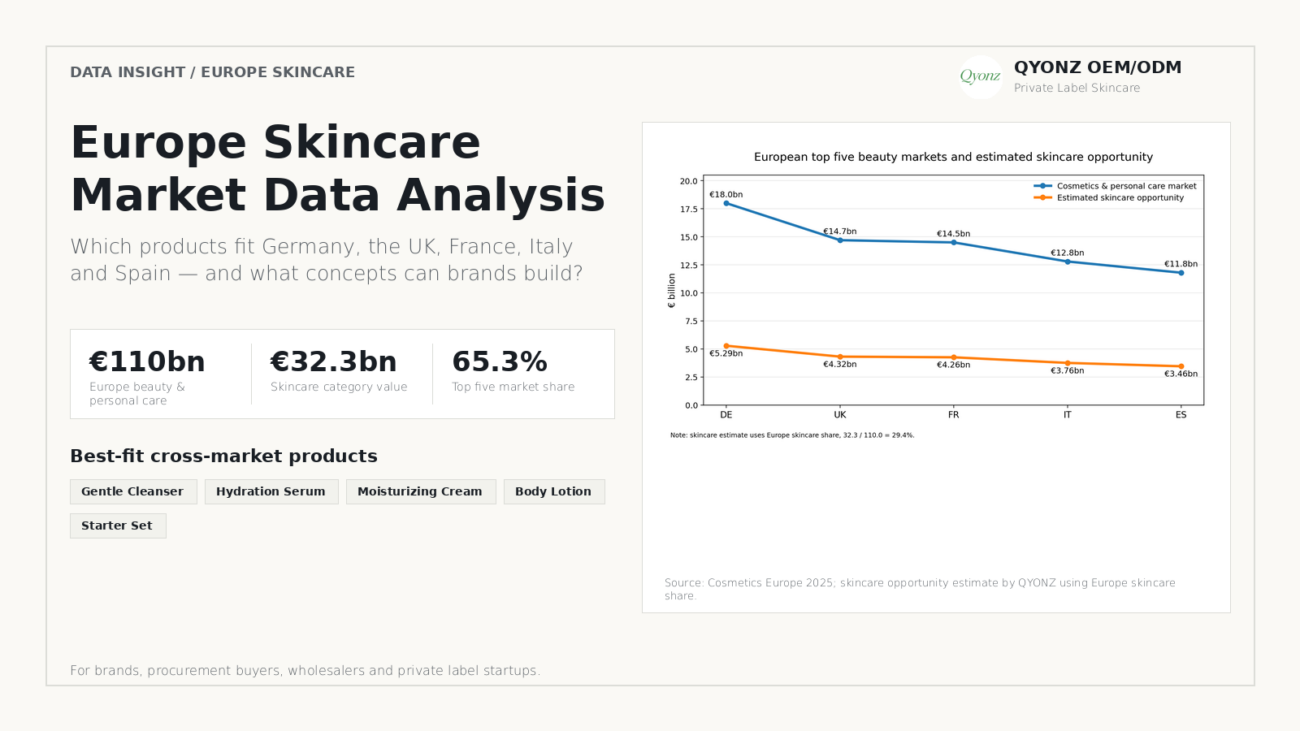
Análisis de datos del mercado de los productos para el cuidado de la piel en cinco países europeos: ¿qué productos son adecuados para su desarrollo en Alemania, el Reino Unido, Francia, Italia y España?
Este artículo analiza las oportunidades de mercado en cinco mercados europeos clave del sector del cuidado de la piel —Alemania, el Reino Unido, Francia, Italia y España— a partir de datos de mercado. Al examinar factores como el tamaño del mercado, las estimaciones de oportunidades, la adecuación del producto al mercado, la adecuación del concepto al mercado y el desarrollo de marcas blancas mediante OEM/ODM, el artículo ayuda a las marcas, compradores, mayoristas y startups del sector del cuidado de la piel a identificar los productos más adecuados para mercados europeos específicos y a traducir los datos en estrategias prácticas de desarrollo de productos para el cuidado de la piel.
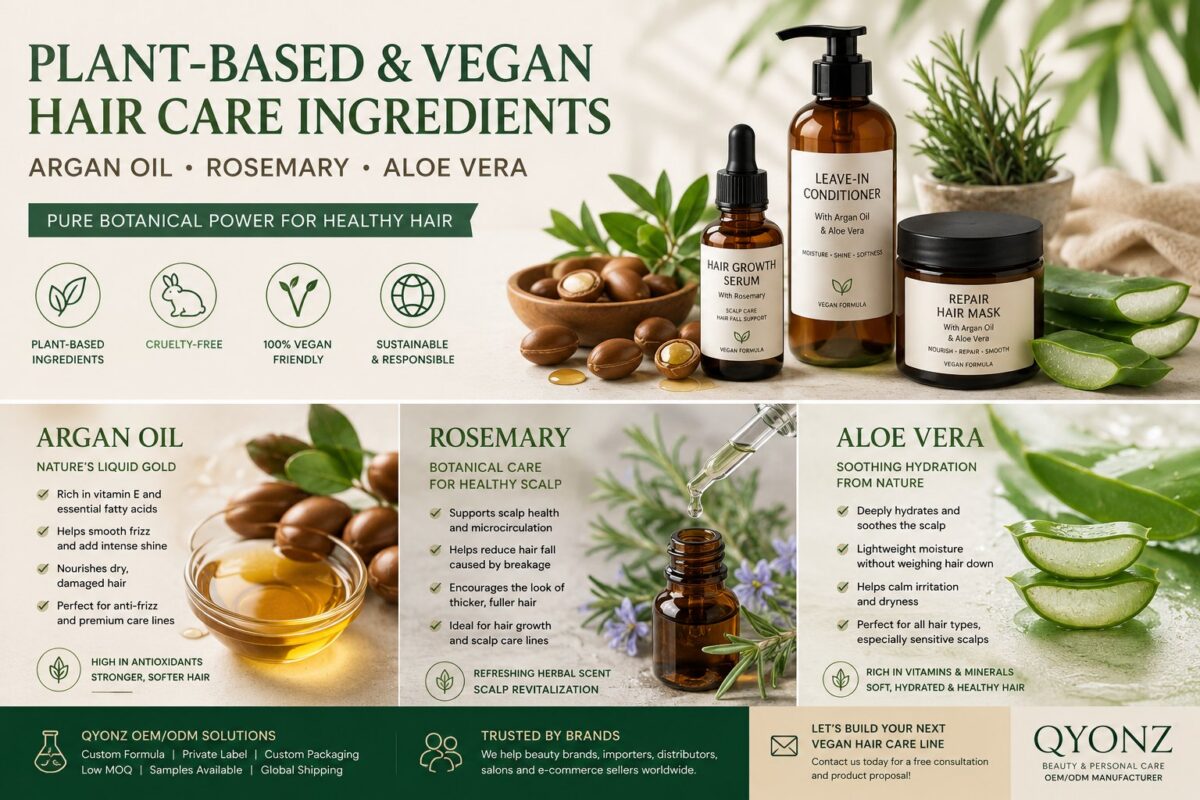
Ingredientes veganos para el cuidado del cabello de marca blanca: aceite de argán, romero y aloe vera para marcas internacionales
Este artículo explica cómo las marcas de belleza, los importadores, los distribuidores, los salones de belleza y los vendedores de comercio electrónico pueden utilizar el aceite de argán, el romero y el aloe vera para crear líneas prácticas de productos capilares de origen vegetal y veganos. Aborda el posicionamiento de los ingredientes, la verificación de las declaraciones veganas, la estrategia de la línea de productos, el valor de los canales de distribución y el apoyo de Qyonz en materia de OEM/ODM.
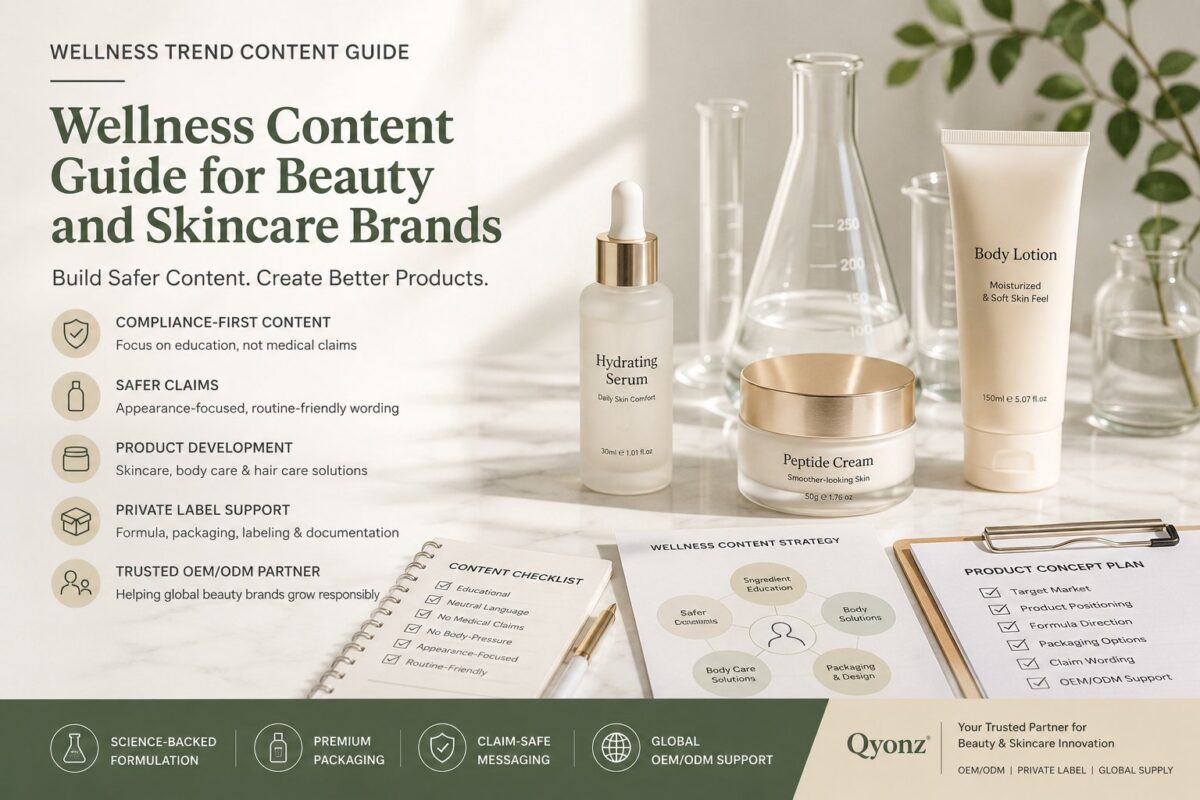
Guía de contenidos sobre tendencias de bienestar para marcas de belleza y cuidado de la piel
Los temas relacionados con el bienestar están cobrando cada vez más protagonismo en los debates sobre belleza, cuidado de la piel, cuidado corporal y estilo de vida de los consumidores. Para las marcas de belleza, la clave está en crear contenidos educativos, neutrales y sin afirmaciones controvertidas que respalden un posicionamiento responsable de los productos, sin hacer promesas de carácter médico, sobre resultados físicos o sobre la apariencia personal. Esta guía explica cómo las marcas pueden desarrollar marcos de contenido más seguros para temas relacionados con el bienestar, incluidas las conversaciones de mercado relacionadas con el GLP-1.
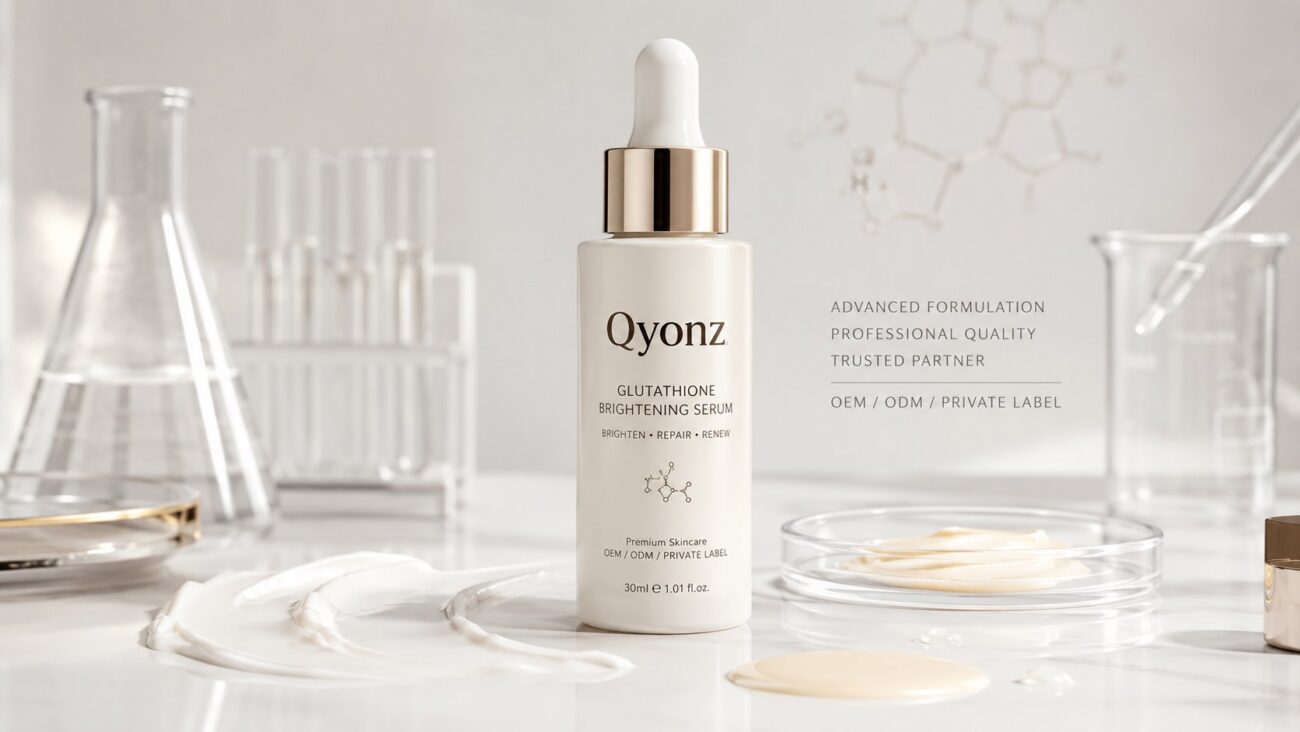
¿Qué es el glutatión en el cuidado de la piel? Una guía de formulación B2B
El glutatión se utiliza cada vez más en productos para el cuidado de la piel centrados en la luminosidad, como sérums, cremas, mascarillas y lociones corporales. Para las marcas de belleza, el verdadero valor no reside solo en el nombre del ingrediente, sino también en el formato del producto, la combinación de ingredientes, la redacción de las declaraciones de seguridad, la estrategia de envasado y el plan de desarrollo OEM/ODM. Este artículo explica cómo las marcas pueden desarrollar productos para el cuidado de la piel con glutatión adoptando un enfoque de formulación B2B, con el apoyo del contexto de mercado, el análisis de la intención de búsqueda, las referencias normativas y tablas prácticas de desarrollo de productos.
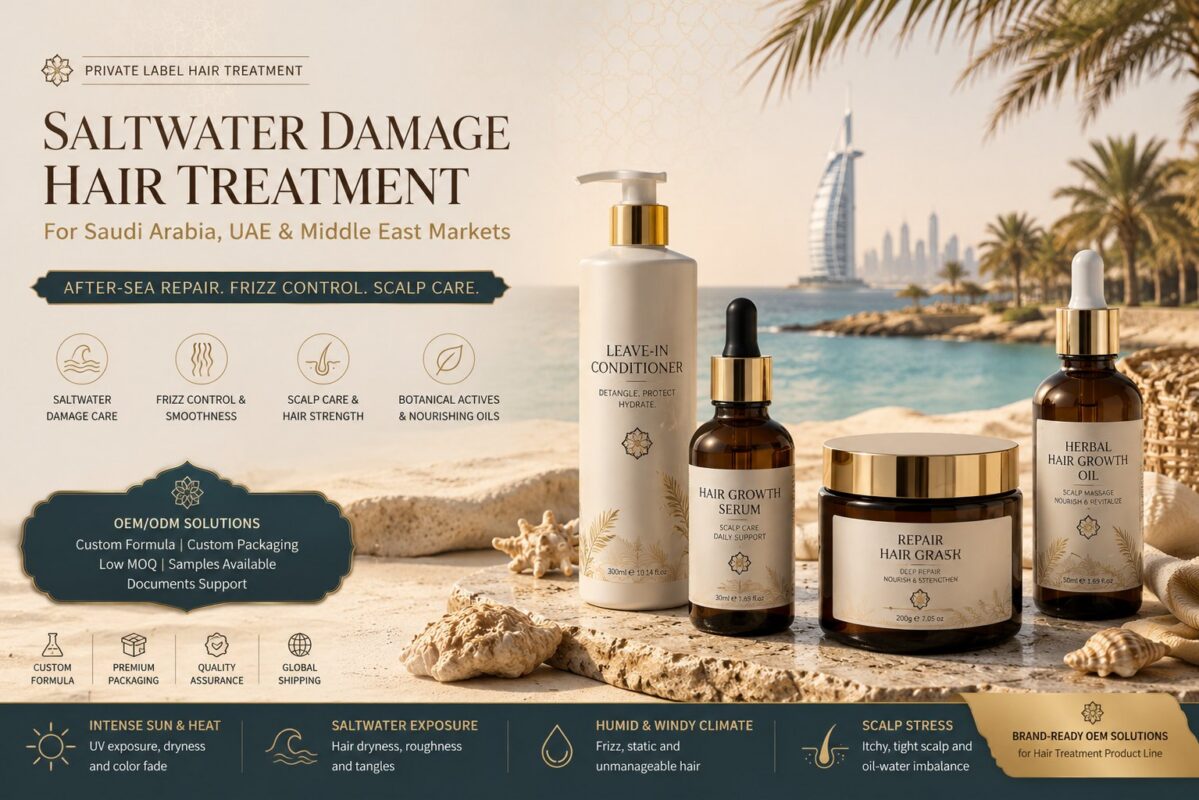
Productos de tratamiento capilar de marca blanca para Oriente Medio: daños causados por el agua salada, encrespamiento y cuidado del cuero cabelludo
Este artículo explica cómo las marcas de belleza, los importadores, los distribuidores, los proveedores de salones de belleza y los vendedores de comercio electrónico pueden desarrollar una línea de tratamientos capilares de marca propia para los mercados de Arabia Saudí, los Emiratos Árabes Unidos y Oriente Medio. Se centra en los daños causados por el agua salada, el encrespamiento, el cabello seco, el cuidado del cuero cabelludo y la reparación tras la exposición al mar, con un posicionamiento práctico de productos como acondicionadores sin aclarado, mascarillas capilares reparadoras, sérums ligeros para el crecimiento del cabello y aceites capilares a base de hierbas para estimular el crecimiento.
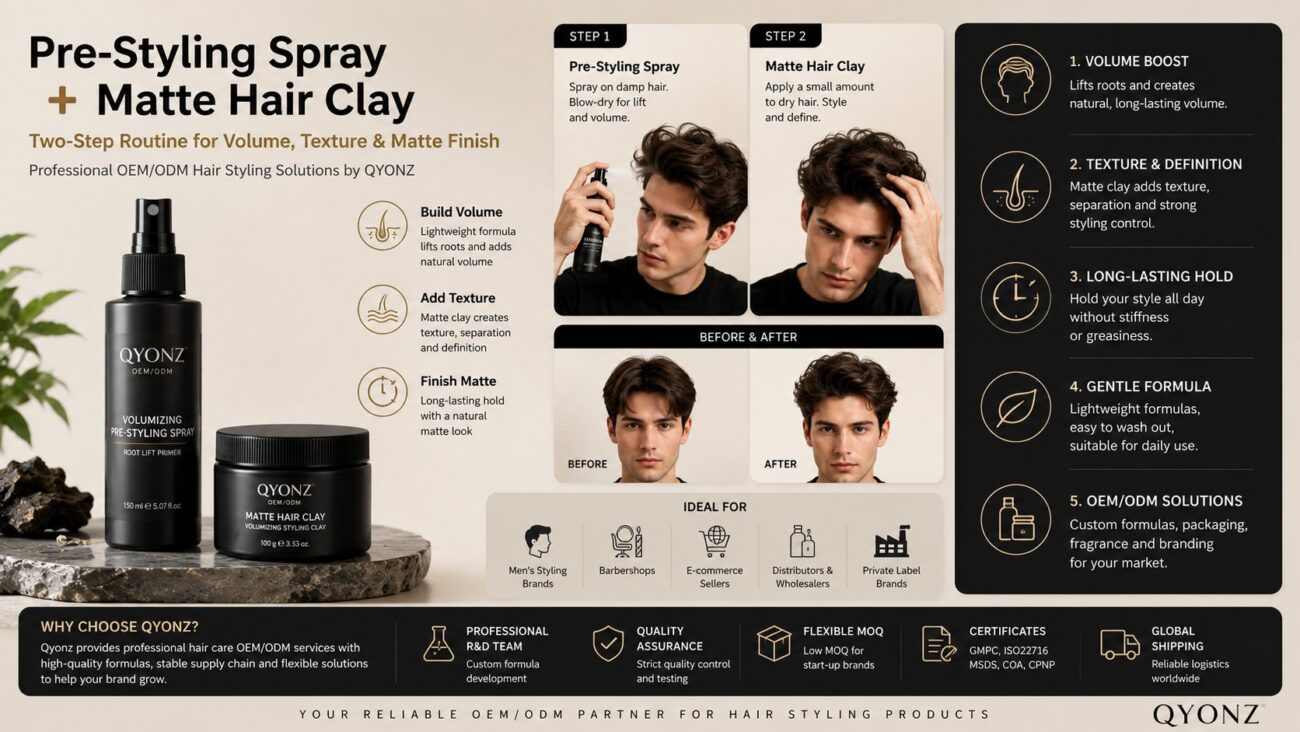
Guía OEM sobre el spray voluminizador para antes del peinado y la arcilla capilar mate para marcas de productos de peluquería masculina
Descubre cómo las marcas de productos de peluquería para hombre pueden crear una línea de productos de dos pasos con un spray voluminizador para antes del peinado y una arcilla capilar mate. Esta guía aborda la orientación en cuanto a fórmulas, las opciones de envase, los factores relacionados con la cantidad mínima de pedido (MOQ), las pruebas de muestras y la planificación de proyectos OEM.
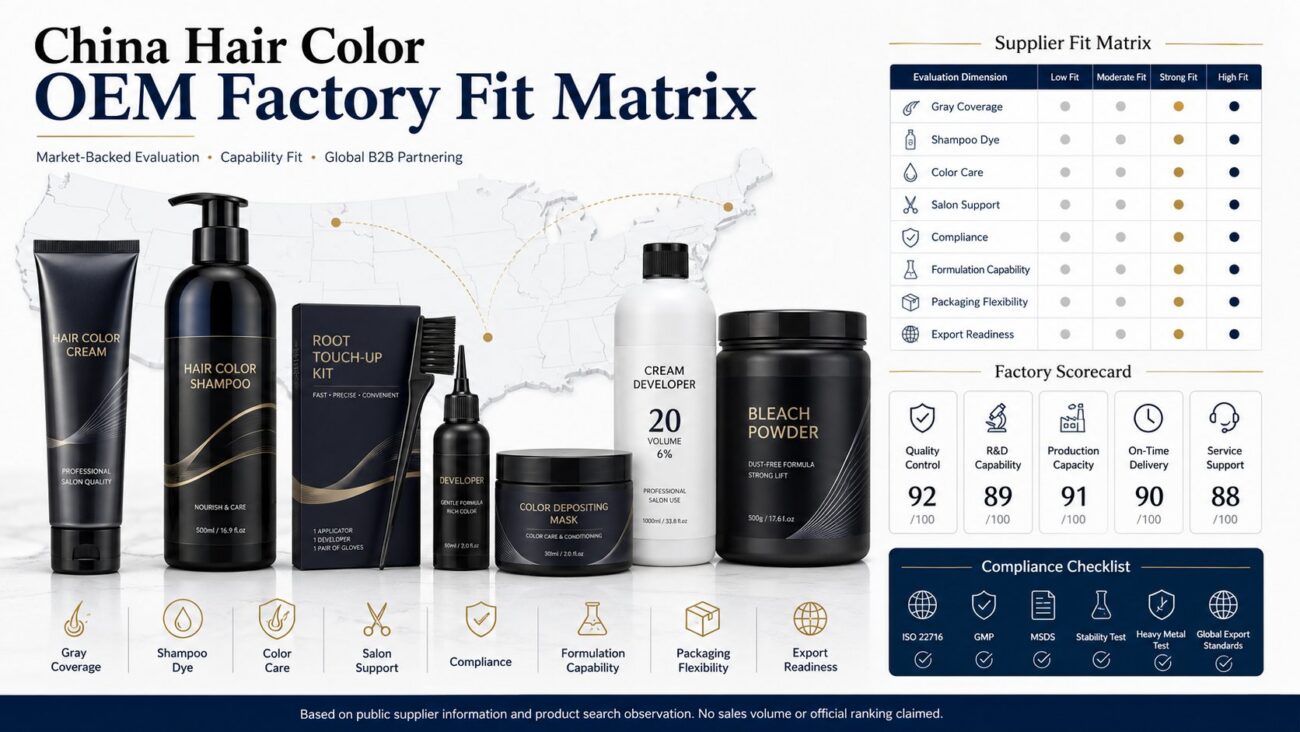
Fábricas chinas de tintes para el cabello que producen para marcas estadounidenses: una clasificación de proveedores según su idoneidad
Esta clasificación de idoneidad de proveedores analiza las fábricas chinas de tintes para el cabello que producen para cuenta ajena (OEM) destinadas a compradores estadounidenses de marcas blancas, basándose en información pública sobre las fábricas, datos sobre productos minoristas en EE. UU., datos de los canales profesionales y los requisitos de cumplimiento de la FDA en materia de tintes para el cabello.
Datos sobre el lanzamiento de un tinte para el cabello en Nueva Zelanda: por qué la cobertura de canas requiere una estrategia que dé prioridad a los canales físicos y contar con la fábrica OEM adecuada en China
Este blog, basado en datos, analiza las oportunidades que ofrece el mercado neozelandés de los tintes para cubrir las canas a partir de datos demográficos públicos, datos digitales, datos del sector minorista, datos sobre formatos de producto y datos sobre el cumplimiento de la normativa cosmética. Además, explica qué tipo de fábrica china de OEM/ODM puede ayudar a los importadores y a los compradores de marcas blancas a convertir el plan de mercado en una línea de productos viable.
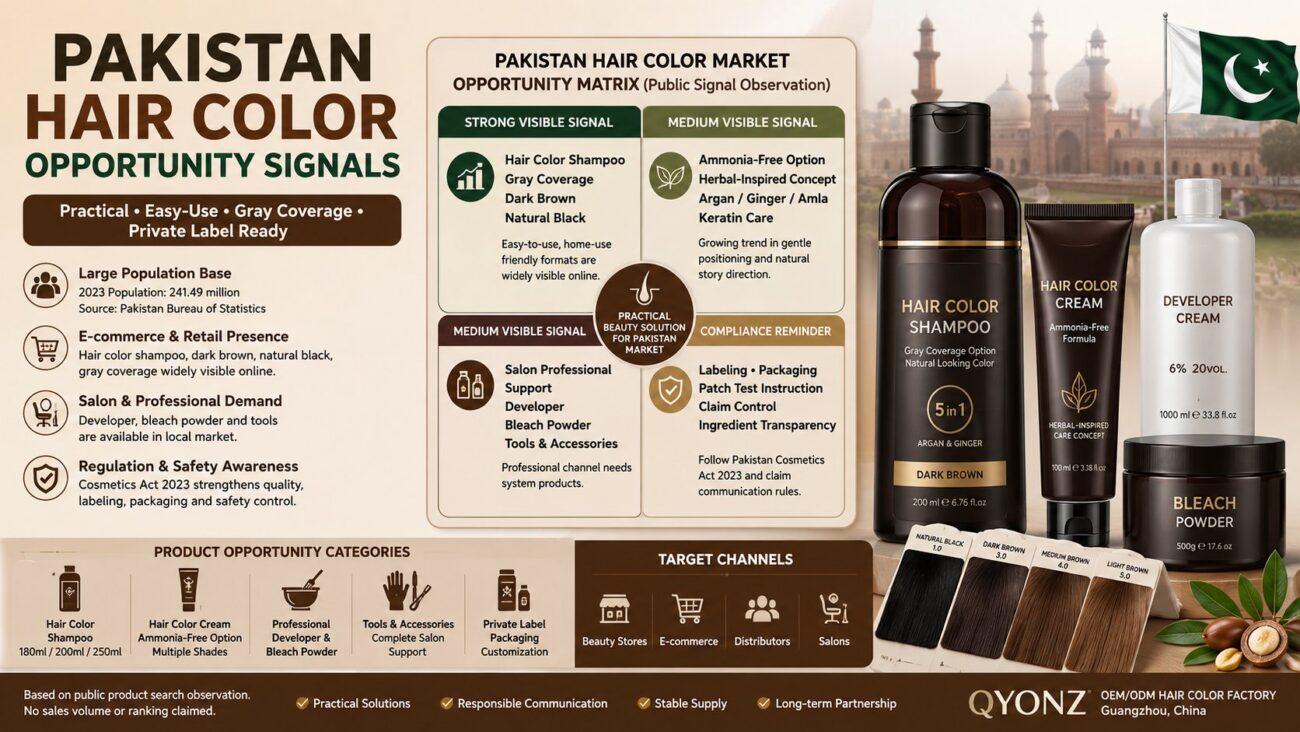
Mercado de los champús para el color del cabello en Pakistán: lo que los compradores B2B deben saber antes de lanzar una línea de marca blanca
Pakistán presenta señales de producto visibles para el público en relación con champús para el color del cabello, en tonos marrón oscuro y negro natural, opciones para cubrir las canas y productos de apoyo para peluquerías. Esta guía explica cómo los importadores, distribuidores y marcas blancas pueden planificar referencias de productos para el color del cabello listas para el mercado sin recurrir a afirmaciones de venta sin fundamento.
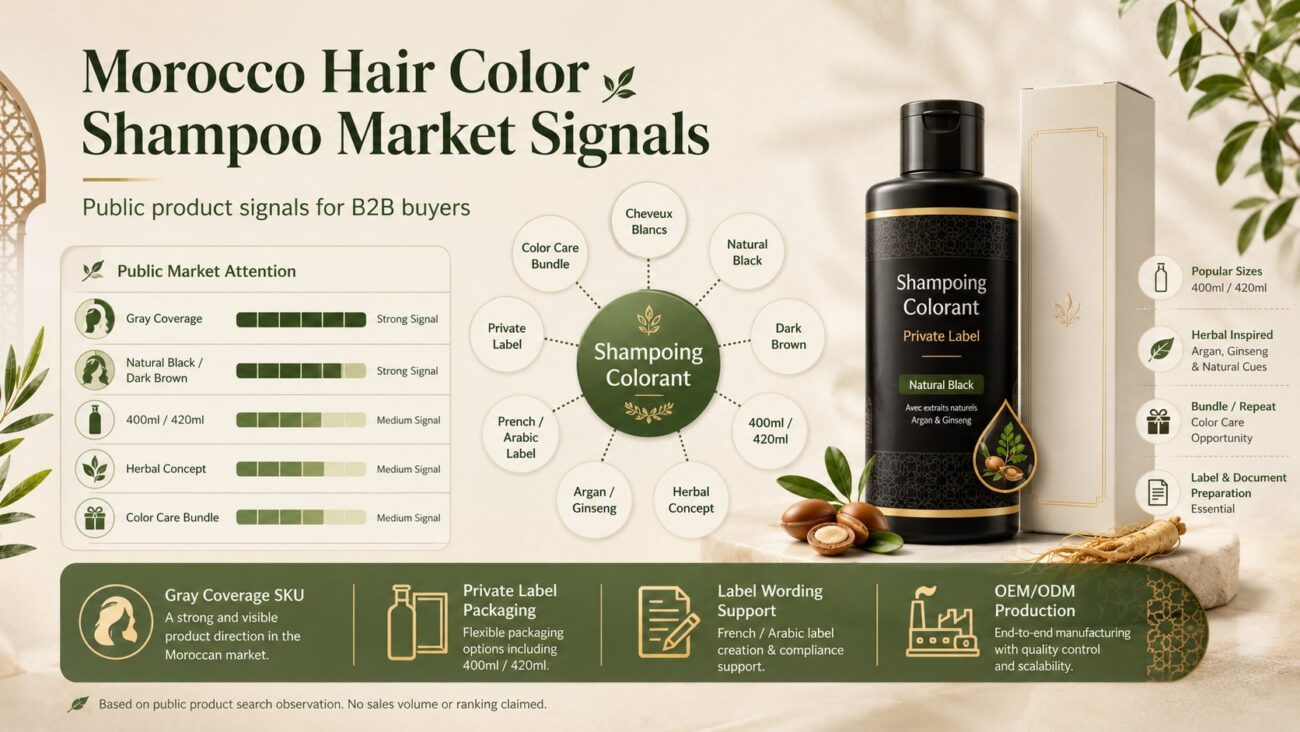
Guía de compra de champús para el cabello teñido en Marruecos: productos de marca blanca para cubrir las canas
Una guía de compra B2B dirigida a los importadores de champús para el cabello de Marruecos, que abarca los champús para cubrir las canas, el envasado de marca blanca, la planificación de tonos, la redacción que tenga en cuenta el cumplimiento normativo y la producción OEM.